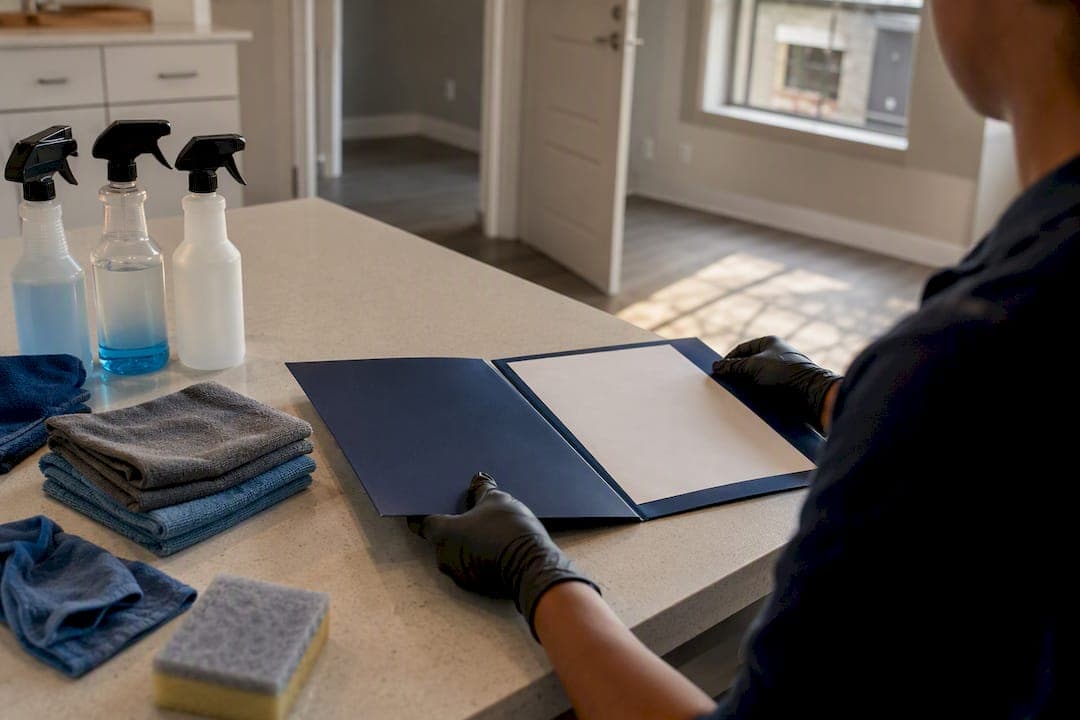
Use a room-by-room cleaner turnover checklist, run the work top-to-bottom and dry-to-wet, and add a 30-minute post-clean inspection before anyone gets a key. That combination catches the misses that tank guest reviews and frustrate incoming tenants. The top-to-bottom, dry-to-wet method means dusting and dry surfaces first, working down to furniture, then finishing with wet-cleaned floors, backing out of the room so nobody walks across a surface that just got disinfected.
Certain tasks are non-negotiable on every turn, no matter the property type:
- Fresh linens on every bed, no exceptions
- Disinfected high-touch surfaces: light switches, door handles, remotes
- Microwave interior, coffee maker, and stovetop wiped and degreased
- Floors vacuumed and mopped, trash emptied from every room including bathrooms
A 30-minute inspection buffer after the clean, before check-in, catches what the cleaner missed. Require photo confirmation or initialed sign-off on the critical items (bed made, bathroom disinfected, kitchen appliances checked) with a timestamp. That single habit turns "trust me, it's done" into a record you can actually check.
Key Takeaways
A written, room-by-room turnover checklist run top-to-bottom and dry-to-wet, paired with photo-gated critical tasks and a 30-minute inspection buffer, is what prevents the misses that actually show up in guest complaints.
| Point | Details |
|---|---|
| Sequence the clean | Work top-to-bottom and dry-to-wet, finishing with floors, to avoid redoing dusted surfaces. |
| Gate critical tasks with photos | Require photo proof only on beds, bathrooms, and kitchen appliances, not every task. |
| Build in an inspection buffer | Reserve about 30 minutes post-clean to catch misses before check-in or move-in. |
| Watch the commonly missed spots | Remote controls, light switches, microwave interiors, and behind toilet bases fail most often. |
| Centralize standards in one workspace | TurnTrack tracks turn status, timeline stages, and property-specific standards in one shared record for $14.99/month. |
Table of Contents
- How Do You Schedule Staff and Handle Shift Handovers?
- How Do You Evaluate Cleaner Performance and Give Feedback?
- What Health and Safety Rules Apply During Turnover?
- What Training Do Cleaners Need on Turnover Standards?
- Why a Written Checklist Beats Relying on Memory
- The Complete Room-By-Room Turnover Checklist
- How Long Should a Turnover Actually Take?
- How Do You Manage the Checklist With Outside Cleaning Companies?
- What Belongs on the Final Make-Ready Inspection?
- Why the Dry-to-Wet Method and Standards Libraries Matter
- How TurnTrack Helps You Run This Checklist Consistently
- Sources
How Do You Schedule Staff and Handle Shift Handovers?
Turnover scheduling breaks down the same way every time: someone assumes the last shift finished a task nobody actually confirmed. A shift handover needs three fixed pieces of information passed forward, every time, no matter how rushed the crew is.
First, the status of the unit right now. Not "almost done," but which rooms are complete, which are in progress, and which haven't been touched. Second, any anomaly found during the shift: a stain that won't come out, a broken blind, a missing remote. Third, supply levels, so the next person or the next turn doesn't start short on toilet paper or trash bags.
Stagger start times so cleaners aren't all arriving at once when a property has multiple units turning the same day. A two-person crew working one three-bedroom unit finishes faster than two solo cleaners each working separate units badly, because paired cleaners split top-floor and bottom-floor work instead of duplicating steps.
Write the handover down somewhere both shifts can see it. A phone note stuffed in a group chat gets buried within an hour. A shared turn record that shows status (Ready, On Track, At Risk, Overdue) means the incoming shift or the next cleaner isn't guessing what happened before they arrived. That's the entire point of a maintenance handoff checklist: it removes the need for anyone to remember anything.
How Do You Evaluate Cleaner Performance and Give Feedback?
Score consistency, not perfection. A cleaner who finishes fast but skips the same three spots every time is a bigger long-term problem than a slower cleaner who never misses anything, because the fast one's mistakes compound across dozens of turns before anyone notices a pattern.
Track performance against the checklist itself, not a general impression. Pull the last five to ten turns for each cleaner and note which specific line items got flagged during inspection. If the same category keeps failing, that's a training gap, not a one-off.
Pro Tip: Keep a running tally of "inspection catches" per cleaner by category (kitchen, bathroom, bedroom). A pattern of misses in one room usually means the cleaner is rushing that step, not that they don't know how to do it.
Feedback works best delivered immediately, tied to a specific photo or note, rather than saved for a monthly review nobody remembers the details of. "The stovetop grease wasn't fully removed on Tuesday's turn, here's the photo" lands differently than "you need to clean better." Give positive feedback the same way. If a cleaner catches something a manager would've missed, say so specifically. Cleaners who never hear anything except complaints stop caring about the parts that don't get flagged.
Set a simple scale: pass, minor rework needed, major rework needed. Track it over time per cleaner and per property, and use it when deciding who gets more units and who needs a refresher walkthrough.
What Health and Safety Rules Apply During Turnover?
Chemical storage and labeling matter more than most managers treat them. Cleaners handling multiple disinfectants and degreasers across several units a day need clearly labeled bottles and a documented list of what's being mixed and used where, because two incompatible cleaners combined in a closed bathroom is a real hazard, not a hypothetical one.
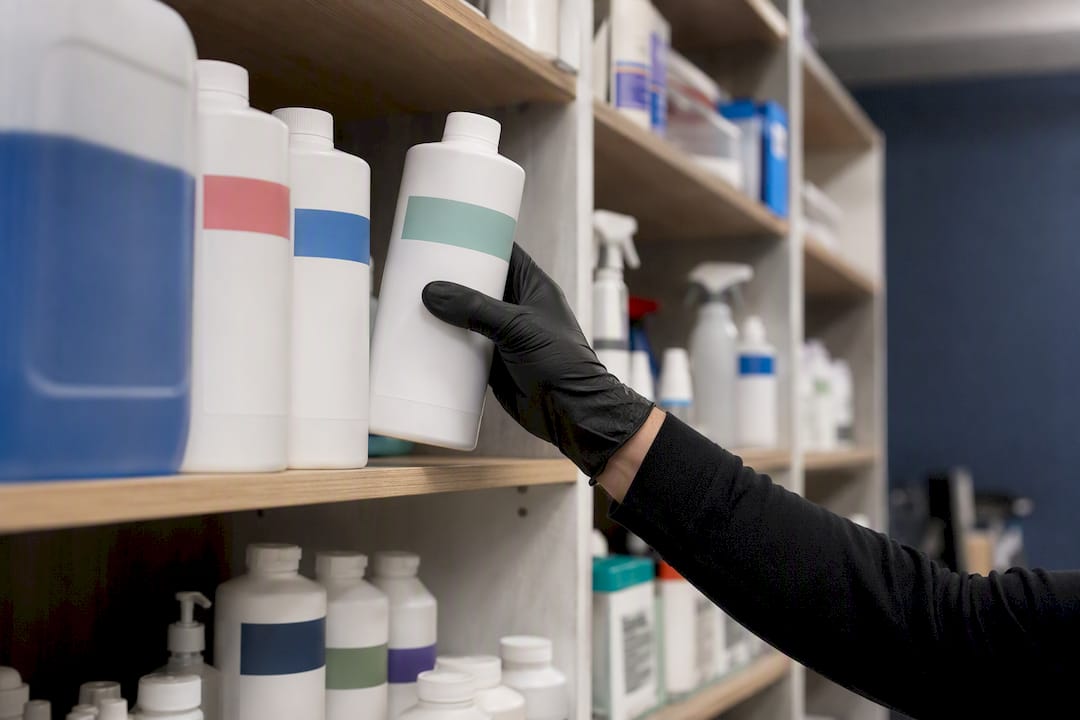
Ventilation during and after cleaning isn't optional in units where guests or tenants arrive within hours. Run exhaust fans and open windows for a minimum window after using bleach-based products, especially in bathrooms with limited airflow.
Personal protective equipment is a baseline expectation, not a suggestion: gloves for anyone handling disinfectants, and closed-toe shoes on every job given the amount of lifting, moving furniture, and working around wet floors.
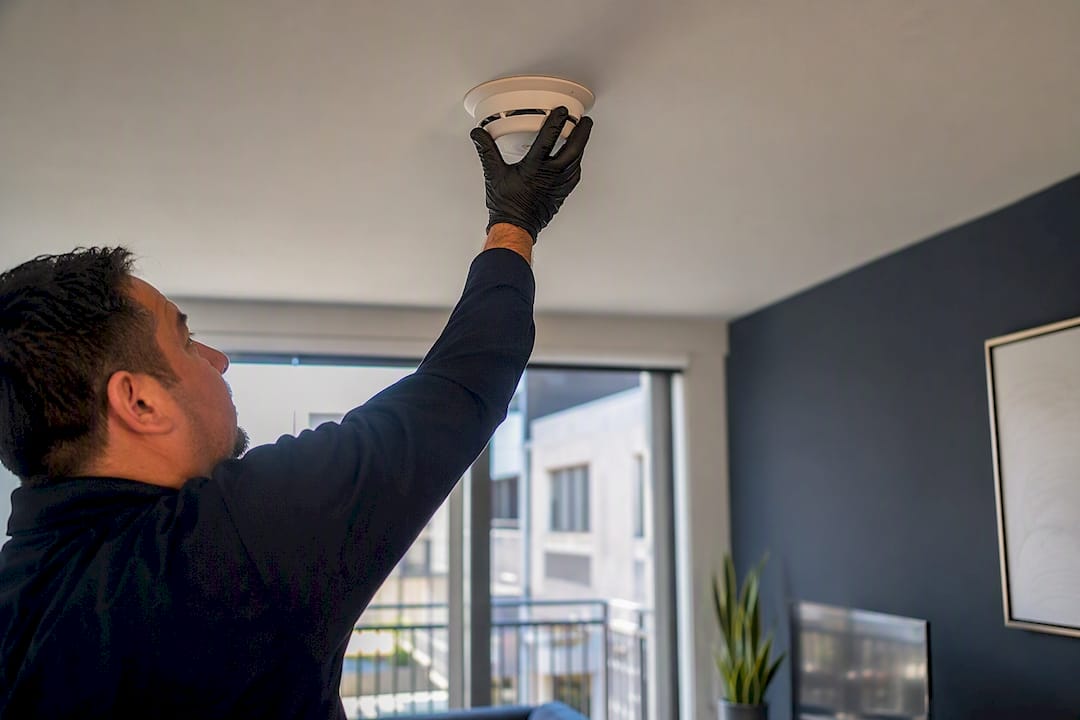
Smoke and carbon monoxide detectors need a documented check on every turn, with the battery-change date recorded, not just a visual glance. This is one of the items a make-ready inspection is specifically designed to verify before anyone moves in, alongside utilities, appliances, and fixtures.
Slip hazards from wet floors during the cleaning window are the most common on-site injury risk for turnover crews working multiple units back to back. A simple wet-floor sign and a sequencing rule (mop last, dry before the next room) handles most of it.
What Training Do Cleaners Need on Turnover Standards?
A cleaner who's great at general house cleaning isn't automatically good at turnover cleaning. The skill sets overlap but they're not identical. General cleaning optimizes for a home someone still lives in. Turnover cleaning optimizes for speed, consistency across different cleaners, and a completely blank-slate result every single time.
New cleaners need a walkthrough of the actual property before their first solo turn, not just a printed checklist handed to them. Show them where supplies are stored, what "clean" looks like at this specific property (some owners want hospital-corner beds, others don't care), and where the previous cleaner has typically run into trouble.
Reference photos matter here more than written instructions. "Fold the towels like this" is vague. A photo of the exact fold, on the exact towel bar, in that exact bathroom, removes the guesswork entirely. This is where a property standards library earns its keep: paint shades, filter sizes, vendor names, all in one place a new cleaner can check without texting five people.
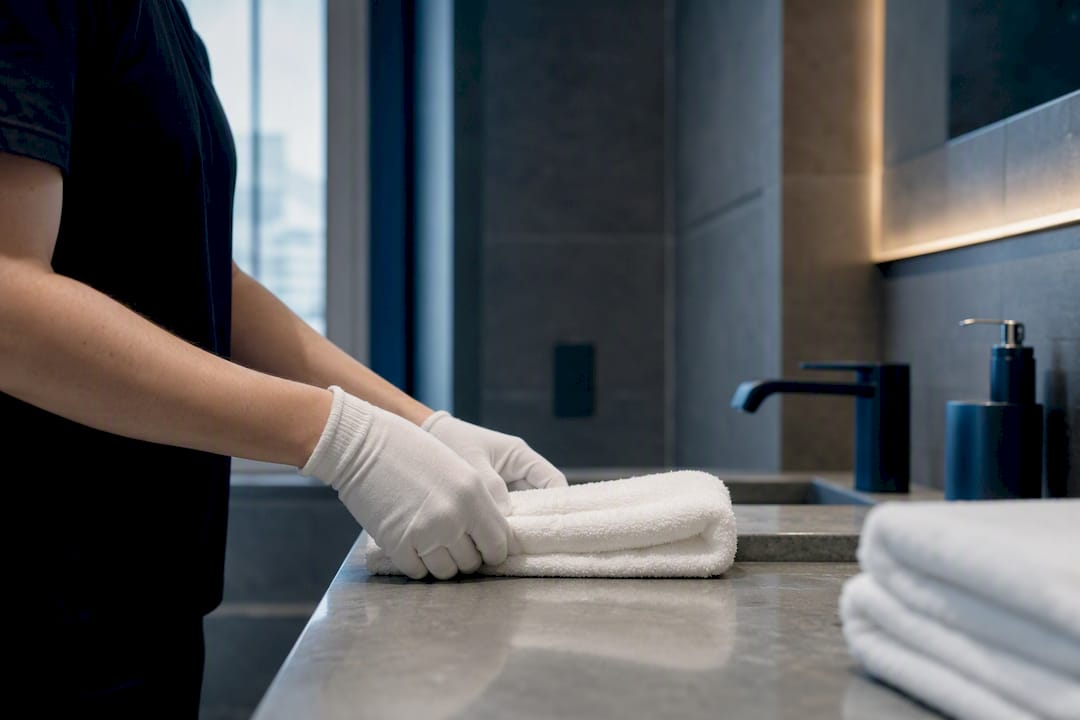
Retraining should happen the moment a pattern of misses shows up, not at some fixed quarterly interval. If a cleaner keeps skipping behind the toilet base or the inside of the microwave, that's a two-minute conversation, not a formal write-up. Those two spots, along with remote controls, light switches, and ceiling fan tops, show up repeatedly on lists of commonly missed turnover items across the industry, so build them into initial training rather than waiting to discover the gap through a bad review.
Why a Written Checklist Beats Relying on Memory
Every property manager has a cleaner they'd call their best one. That's exactly the problem. The moment quality depends on which specific person shows up, the operation is fragile. A written checklist turns "ask Maria how she does it" into a standard anyone can execute the same way.
The ambiguity in an unwritten standard is where most disputes start. A cleaner says the bathroom was spotless. The manager says it wasn't. Without a shared, specific standard, that's just two opinions arguing. A checklist with explicit line items (grout, mirror edges, behind the toilet base) turns a subjective disagreement into a pass or fail against a written line.
Photo evidence shortens that dispute resolution dramatically, and it does something else people underestimate: it trains new cleaners faster than any verbal explanation. A before-and-after photo of what "clean stovetop" actually looks like at this property teaches faster than a paragraph of instructions ever will, a point documented in cleaning-industry photo-proof guidance that applies just as directly to rental turnovers as to any other service trade.
Don't treat the checklist as static. Customize it to the property's actual layout on day one, then revisit it every three to five stays or turns. Layouts have quirks. A unit with a walk-in shower needs different line items than one with a tub. A checklist that never gets updated slowly drifts out of sync with the property it's supposed to describe.
The Complete Room-By-Room Turnover Checklist
This is the operational core: work through it in order, room by room, and don't skip ahead to floors before surfaces are done.
Entrance and first impression
The entry sets the tone before a guest or tenant sees anything else.
- Check that both locks and any smart lock or keypad function correctly
- Wipe down the door, frame, and any glass insert
- Shake out or replace the entry mat
- Confirm porch or entry lights work and replace bulbs if needed
- Refresh any welcome materials (guidebook, Wi-Fi card, welcome note) if the property uses them
Living and common areas
- Dust from top to bottom: shelves, picture frames, ceiling fan blades before moving to furniture
- Wipe down electronics, remote controls, and their charging cables
- Fluff and straighten cushions and throw pillows, checking underneath for debris
- Disinfect high-touch surfaces: light switches, doorknobs, thermostat panel
- Vacuum upholstery and under furniture, not just the open floor space
- Check curtains or blinds are open (or closed, per property preference) and functioning
Kitchen
The kitchen carries the highest miss rate on any turnover cleaning checklist, largely because appliance interiors get skipped when time is tight.
- Clean inside the microwave completely, including the ceiling of the unit
- Run and empty the dishwasher, or hand-wash and put away any leftover dishes
- Wipe down cabinet fronts and handles, not just countertops
- Clean the coffee maker, including the reservoir if the unit provides one
- Degrease the stovetop and wipe down the oven door
- Restock basics per the property's minimum: dish soap, sponge, paper towels, trash bags, coffee filters
- Empty and reline the kitchen trash can
Bedrooms
- Strip every bed completely and start the laundry load immediately, don't let it wait
- Launder or spot-check mattress protectors for stains that need attention beyond a normal wash
- Make beds with fresh linens using the property's preferred bedding configuration
- Check closets and drawers for anything left behind by the previous occupant
- Dust nightstands, headboards, and lamp shades
- Confirm lamps and any bedside outlets work
Bathrooms
- Clean the toilet inside, outside, and around the base, this is one of the most frequently missed spots
- Scrub shower or tub grout lines, not just the visible tile surface
- Clean the mirror streak-free and wipe down the counter and sink
- Restock toiletries and towels to the property's set minimum quantity
- Check the exhaust fan runs and clear any visible dust from the vent cover
- Empty and reline the bathroom trash can
Laundry and utility areas
- Start the linens load as the very first task if cleaning solo, so it's running while you work other rooms
- Empty the dryer's lint trap before and after use
- Check laundry supply levels: detergent, dryer sheets if the property stocks them
- Confirm the washer and dryer are both empty and doors are left open to prevent musty odors
Outdoor areas
- Wipe down patio or balcony furniture, checking for pollen or dust buildup
- Do a quick debris sweep of the immediate outdoor space
- Give the grill a quick scrape if the property includes one
- If the property has a pool or hot tub, do a cursory visual check for debris and confirm the cover or safety gate is secure, and flag anything beyond a quick clean for the appropriate vendor
Pro Tip: Laminate the room-by-room checklist and leave one physical copy in a kitchen drawer at the property itself. Cleaners without reliable phone service or working from a printed handout still need access to the standard, and a physical copy never runs out of battery.
How Long Should a Turnover Actually Take?
Rushed turnovers are where checklists get abandoned halfway through. Realistic time bands protect the checklist from getting skipped when the schedule feels tight.
Sequence the work in a fixed order: cleaning first, then laundry, then restocking and staging, then the inspection buffer last. Doing laundry before cleaning means wet towels sit in a hamper while surfaces get dusty again. Doing the inspection before restocking means you're checking a unit that isn't actually finished yet.
When work is properly sequenced, full make-ready turns that involve repairs, paint, and flooring can complete in three to five days. Mis-sequencing is the single biggest cause of rework and extended vacancy on those larger jobs, and the same principle scales down to a same-day cleaning turnover: skip a step out of order, and you're redoing it later.
For back-to-back bookings, build the minimum gap between guests around the largest number in that table, not the smallest. A property that books same-day turnovers with less than three hours of buffer between checkout and check-in is gambling on nothing going wrong.
How Do You Manage the Checklist With Outside Cleaning Companies?
External cleaning crews add a layer of distance between you and the actual work, which is exactly why the checklist and reporting need to be tighter, not looser.
- Run a 30-minute walkthrough before the first solo turn. Show the cleaner the supply closet, the trash pickup point, and any property quirks that aren't obvious from a checklist alone (a temperamental garbage disposal, a shower that needs extra grout attention).
- Gate the critical tasks behind a photo requirement. Beds, bathrooms, and kitchen appliances get a photo confirmation. Everything else doesn't need one, that keeps the process from feeling like surveillance while still covering the items that actually show up in guest complaints.
- Require a three-question report at the end of every turn: Was everything on the checklist completed? Was anything damaged or missing? Are any supplies running low?
- Set a minimum restock threshold for towels, toiletries, and cleaning supplies, and agree on a backup cleaner or escalation contact in advance, before a no-show turns into an emergency two hours before check-in.
Pro Tip: Ask the cleaning company for their own training material before onboarding them. If they already have a structured process, you're layering your property standards on top of an existing system instead of building compliance habits from zero.
What Belongs on the Final Make-Ready Inspection?
The inspection is the gate that stops a bad clean from becoming a guest complaint or a lease dispute. Walk the unit area by area and verify: lights and outlets in every room, HVAC running and set correctly, hot water actually hot, appliances functioning, Wi-Fi connected, all locks operating, smoke and carbon monoxide detectors tested, and the unit staged the way the property expects.
Document any defect with a photo, a short note, and an assigned owner. "Bathroom vanity leak, photo attached, assigned to plumber, ETA 24 hours" is a complete record. A vague note like "bathroom needs attention" isn't.
Not every defect should delay check-in. A make-ready inspection exists to separate the two categories cleanly:
- Delay check-in: no hot water, a broken lock, a non-functioning smoke detector, standing water
- Remedial vendor work post-check-in: a loose cabinet hinge, a scuff on trim paint, a slow-draining sink that still drains
Roughly 30 minutes for this inspection buffer is enough for a standard unit, and it's the single highest-leverage habit in this entire process.
Why the Dry-to-Wet Method and Standards Libraries Matter
The top-to-bottom, dry-to-wet method isn't cosmetic advice, it's sequencing logic that prevents rework. Dust settles downward. Clean the floor first and you're immediately undoing that work when you dust the shelves above it ten minutes later. The industry-standard approach works down from dry surfaces to wet floor cleaning last, exiting the room backward so nobody steps on what just got mopped.
A standards library takes that same discipline and applies it to property-specific detail instead of task order. Embedding exact specs into the work order, the paint shade, the HVAC filter size, the preferred vendor, removes the guesswork that slows a tech or cleaner down mid-turn.
Turnover cleans should happen after every occupancy as routine, with a deeper clean scheduled every three to six months to catch what a standard turn doesn't: behind appliances, grout lines, upholstery buildup.
Optional photo documentation at key stages, tied to specific inspection items rather than forced onto every single task, builds an audit-ready record without turning the job into paperwork.
Short Operator Notes From the TurnTrack Team
A shared turn record with a visible status (Ready, On Track, At Risk, Overdue) removes the coordination drag of texting five people to find out if a unit's ready. Photo-gate a handful of tasks, not every task. Beds, bathrooms, and appliances earn documentation. Forcing photos on every line item just trains people to rush through the camera step. Revisit the checklist itself every three to five stays, especially after repeat guest feedback on the same issue.
— TurnTrack Team
How TurnTrack Helps You Run This Checklist Consistently
Everything covered here, the room-by-room sequence, the photo-gated critical tasks, the inspection buffer, the property-specific standards, is exactly what TurnTrack was built to hold in one place instead of scattered across texts and paper checklists.
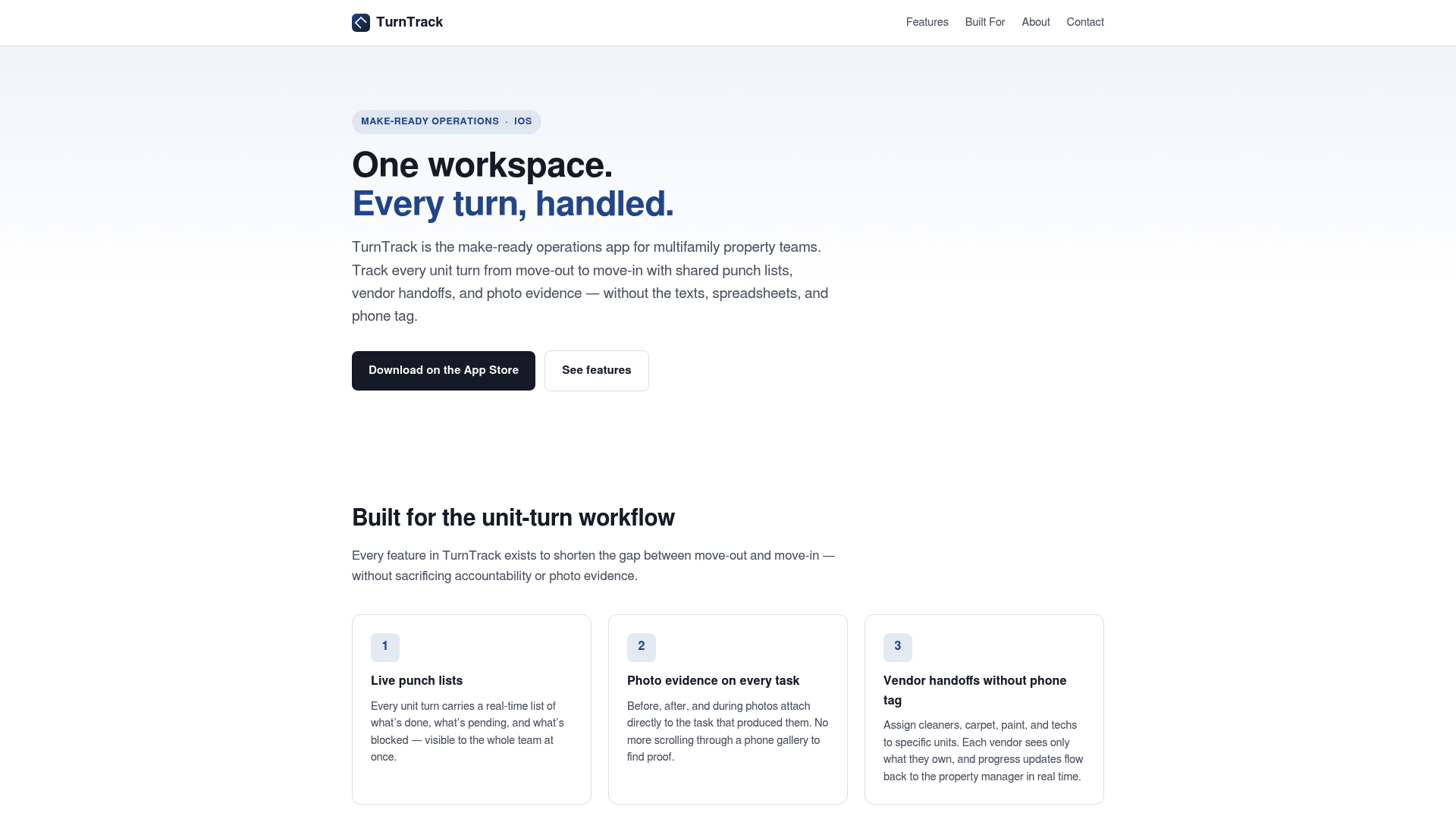
Every unit gets a shared turn record with a status you can see at a glance, Ready, On Track, At Risk, or Overdue, tied to a timeline that runs Move-Out through Tech Start, Cleaners, Carpet, Inspection, and Make-Ready. Inspections get walked area by area on a phone, whether it's Move-Out, Mid-Turn, or Move-In, and photo evidence attaches to the specific tasks that actually need it, not every single line item. The Property Standards Library holds the exact paint shade, filter size, and preferred vendor for each property so a cleaner or tech gets the answer without a group chat detour, and vendor contacts live inside the turn itself instead of a separate list you have to dig through.
TurnTrack runs on a workspace-level subscription at $14.99 a month with a free trial, available now on iOS through the App Store. One subscription covers your invited team. If you're managing turns across several units and tired of standards living only in someone's head, start a trial at TurnTrack and see whether a shared record beats the current mix of texts and spreadsheets.
Sources
- Vacation Rental Cleaning Checklist Template (2026)
- Make Ready Inspection Checklist for Property Turnover | SafetyCulture
- Apartment Make-Ready Checklist + Free Toolkit (2026) | Lula