
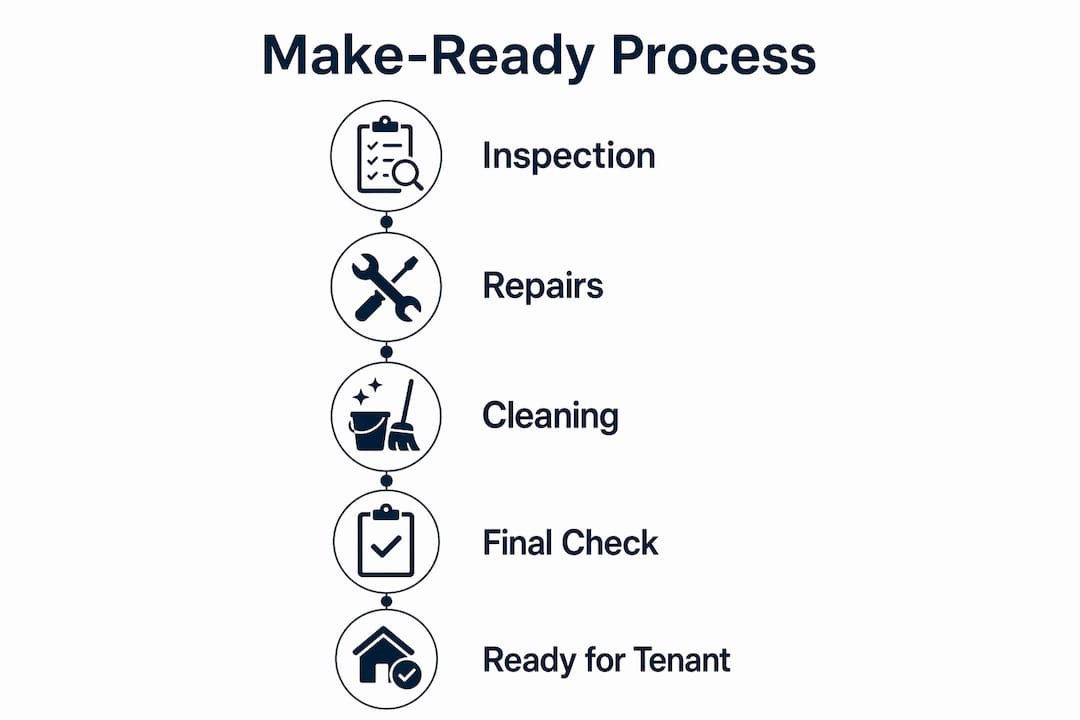
Make-ready is defined as the physical unit preparation process that begins when a tenant hands back keys and ends when a property manager signs off on rent-ready status. It covers inspection, repairs, cleaning, and a final quality check. Make-ready sits inside the broader apartment turnover lifecycle but does not include marketing, leasing, or tenant screening. For property managers and maintenance professionals running multiple active turns at once, understanding exactly where make-ready starts and stops is the difference between a tight operation and a chaotic one.
What is make-ready and what does it include?
Make-ready is the physical unit prep stage that starts at move-out key handback and ends with a signed approval of rent-ready status. It excludes every administrative step that happens before or after the unit itself is touched. That boundary matters because it defines who owns the work, what the timeline covers, and what the budget should reflect.
The process follows a consistent sequence. Skipping steps or reordering them creates rework, which is one of the most common and avoidable cost drivers in make-ready operations.
- Move-out inspection. Walk every area of the unit immediately after key handback. Document existing damage, wear beyond normal use, and any items left behind. This inspection sets the scope for everything that follows.
- Trash-out. Remove all tenant belongings, trash, and debris. This step must finish before maintenance can safely start repairs. Delays here push every downstream task back.
- Repairs. Address functional issues first: plumbing, electrical, HVAC, appliances. Then move to cosmetic fixes like patching drywall, replacing hardware, and touching up paint.
- Deep cleaning. Clean the full unit after repairs are complete, not before. Scope includes appliances, cabinets, baseboards, vents, and any area a surface clean misses.
- Carpet and flooring. Steam clean or replace carpet after cleaning is done. Doing this earlier means redoing it if repairs leave dust or debris.
- Final quality assurance walkthrough. Check every item on the punch list before the unit is released. A final walkthrough 24–48 hours before move-in catches issues before the new tenant does.
Pro Tip: Use a unit-specific checklist, not a generic one. A standardized checklist tied to the property's actual specs, paint colors, filter sizes, and preferred vendors prevents the "what goes here?" questions that slow techs down mid-turn.
Make-ready checklists protect property value and confirm habitability compliance, which reduces long-term liability. A checklist is not paperwork for its own sake. It is the mechanism that keeps every tech and vendor working from the same standard.

How long does a make-ready take?
A standard make-ready lasts 3–5 days for a typical unit in average condition. Complex units with significant damage, deferred maintenance, or specialty finishes can run 5–10 days. That range is the operational reality for most property managers in 2026.
Several factors push timelines past the standard window:
- Trash-out delays. Junk removal is a critical path item. If the vendor is not scheduled before key handback, the maintenance team sits idle.
- Repair scope discovered during inspection. Hidden water damage, mold, or appliance failures add days that were not in the original plan.
- Vendor sequencing gaps. Carpet crews arriving before cleaning is done, or painters showing up before drywall is patched, forces rescheduling.
- Missing property specs. A tech who does not know the correct paint color or HVAC filter size loses time making calls and waiting for answers.
The distinction between make-ready duration and full turnover duration matters for scheduling. Turnover covers the full cycle including marketing and leasing, which can take weeks. Make-ready is the physical work inside that cycle, measured in days. Conflating the two leads to inaccurate vacancy projections and missed move-in dates.
Task sequencing directly affects vacancy time and revenue in competitive rental markets. Running inspection, repair, cleaning, and quality assurance in the correct order is not a preference. It is the fastest path through the turn.
What does make-ready cost and how should you budget for it?
Average make-ready costs range from $1,000 to $5,000 per unit for standard work. Heavy turns involving significant damage or extensive repairs can exceed $8,000. That spread reflects real variation in unit condition, regional labor rates, and the scope of work required.
The main cost drivers are:
- Unit condition at move-out. A unit left in poor condition requires more labor hours and more materials.
- Scope of repairs. Replacing appliances, refinishing floors, or repainting entire rooms costs significantly more than touch-up work.
- Regional labor rates. Vendor pricing varies by market. A carpet replacement in a high-cost metro costs more than the same job in a smaller market.
| Cost category | Typical range | Notes |
|---|---|---|
| Standard make-ready | $1,000–$5,000 | Average condition unit, routine repairs |
| Heavy turn | $8,000+ | Significant damage, major repairs required |
| Renovation | Varies widely | Upgrades and improvements beyond baseline |
Make-ready costs are restoration expenses, not capital improvements. Renovations that upgrade finishes or change layouts belong in a separate budget line. Mixing the two produces inaccurate unit-level cost data and makes it harder to identify where money is going.
Pro Tip: Track costs at the unit level, not just the property level. When you know what each turn actually costs, you can spot patterns, negotiate vendor rates with real data, and identify which unit types consistently run over budget.
How does make-ready differ from renovations and full apartment turnover?
Make-ready focuses on restoring a unit to rentable condition. Renovations involve upgrades, improvements, or structural changes that increase the unit's value or change its character. Conflating the two creates budget confusion and misaligned team expectations.
Full apartment turnover is the broader process that includes every step from a tenant giving notice through a new tenant moving in. That lifecycle covers marketing the vacancy, screening applicants, executing a lease, and completing the physical unit prep. Make-ready is one phase inside that lifecycle, not the whole thing.
| Phase | Scope | Duration | Owner |
|---|---|---|---|
| Make-ready | Physical unit prep: inspect, repair, clean, QA | 3–10 days | Maintenance team |
| Renovation | Upgrades, finish changes, layout improvements | Weeks to months | Capital projects team |
| Full turnover | Make-ready plus marketing, leasing, screening | Days to weeks | Property management team |
Distinguishing turnover from make-ready improves scheduling accuracy and prevents the operational confusion that happens when leasing teams and maintenance teams are working from different assumptions about what "ready" means. A unit that is make-ready complete is not necessarily leased. A unit that is leased is not necessarily make-ready complete. Both conditions need to be tracked separately.
Best practices for running make-ready operations efficiently
Efficient make-ready operations share three characteristics: a fixed task sequence, a standardized checklist, and clear coordination between maintenance, cleaning, and vendor teams. Properties that skip any of these three consistently see longer turn times and higher costs.
- Sequence tasks correctly every time. Inspection before repairs. Repairs before cleaning. Cleaning before carpet. Carpet before the final walkthrough. Reversing any step creates rework.
- Complete the final walkthrough 24–48 hours before move-in. A final walkthrough before move-in catches issues while there is still time to fix them. Walking the unit the morning of move-in leaves no margin.
- Coordinate vendors before the turn starts. Schedule the trash-out crew, carpet vendor, and cleaning team before key handback. Waiting until the unit is open to make those calls adds days.
- Use property-specific specs, not memory. The correct paint color, filter size, and faucet model should be written down and accessible to every tech and vendor working the unit.
Skipping or rushing make-ready leads to costly future repairs and tenant complaints. The time saved by cutting corners in a turn is almost always spent twice over fixing problems after move-in.
Pro Tip: Run a mid-turn inspection at the halfway point, not just at the end. Catching a missed repair or a sequencing error on day two is far cheaper than discovering it during the final walkthrough.
TurnTrack is built specifically for this workflow. Every turn gets a shared record with a status (Ready, On Track, At Risk, or Overdue) and a timeline that runs from Move-Out through Tech Start, Cleaners, Carpet, Inspection, and Make-Ready. Vendor contacts live inside the turn record, so a tech who needs the carpet crew does not have to dig through a separate list. The Property Standards Library stores the exact Sherwin-Williams paint shade, HVAC filter size, and preferred vendor for each property, and shares that information to a tech or vendor without requiring them to have a TurnTrack account.
Key Takeaways
Make-ready is the physical unit preparation process that determines how fast a vacant unit returns to revenue, and running it without a fixed sequence and shared documentation consistently produces delays and rework.
| Point | Details |
|---|---|
| Make-ready defined | Physical unit prep from key handback to rent-ready sign-off, separate from leasing and marketing. |
| Standard timeline | Most units complete in 3–5 days; complex or damaged units can take up to 10 days. |
| Cost range | Standard make-ready runs $1,000–$5,000; heavy turns can exceed $8,000. |
| Task sequence matters | Inspection → repair → clean → carpet → final walkthrough is the correct order every time. |
| Final walkthrough timing | Walk the unit 24–48 hours before move-in to catch issues while there is still time to fix them. |
The part most operators underestimate
The make-ready process gets treated as a checklist task when it is actually a coordination problem. After 9+ years working unit turns in the field, the pattern is consistent: the properties with the shortest vacancy times are not the ones with the fastest techs. They are the ones where every person working the unit knows exactly what to do, in what order, and to what standard, before they walk through the door.
The most expensive make-ready mistakes are not the big repairs. They are the small sequencing errors that force rework. Carpet cleaned before painting is done. A final walkthrough skipped because the leasing team already scheduled the move-in. A tech who spent 20 minutes calling around to find out what paint goes on the walls. None of those are catastrophic individually. Together, across 10 active turns, they add days to your vacancy and real dollars to your costs.
The operators who treat make-ready as a workflow, not just a task list, consistently outperform the ones who do not. That means a fixed sequence, written property specs, vendor contacts that do not live in one person's phone, and a shared record that everyone can see. When the service manager is out sick, the turn does not stop. When a vendor asks what tile goes in unit 204, the answer is in the system, not in someone's memory.
Make-ready is not glamorous work. But it is the work that determines whether your vacancy is measured in days or weeks.
— TurnTrack Team
TurnTrack keeps your make-ready operations on track
Running 5–15 active turns at once means managing multiple move-out dates, vendor schedules, unit conditions, and deadlines simultaneously. When that coordination lives across texts, emails, and spreadsheets, things fall through.
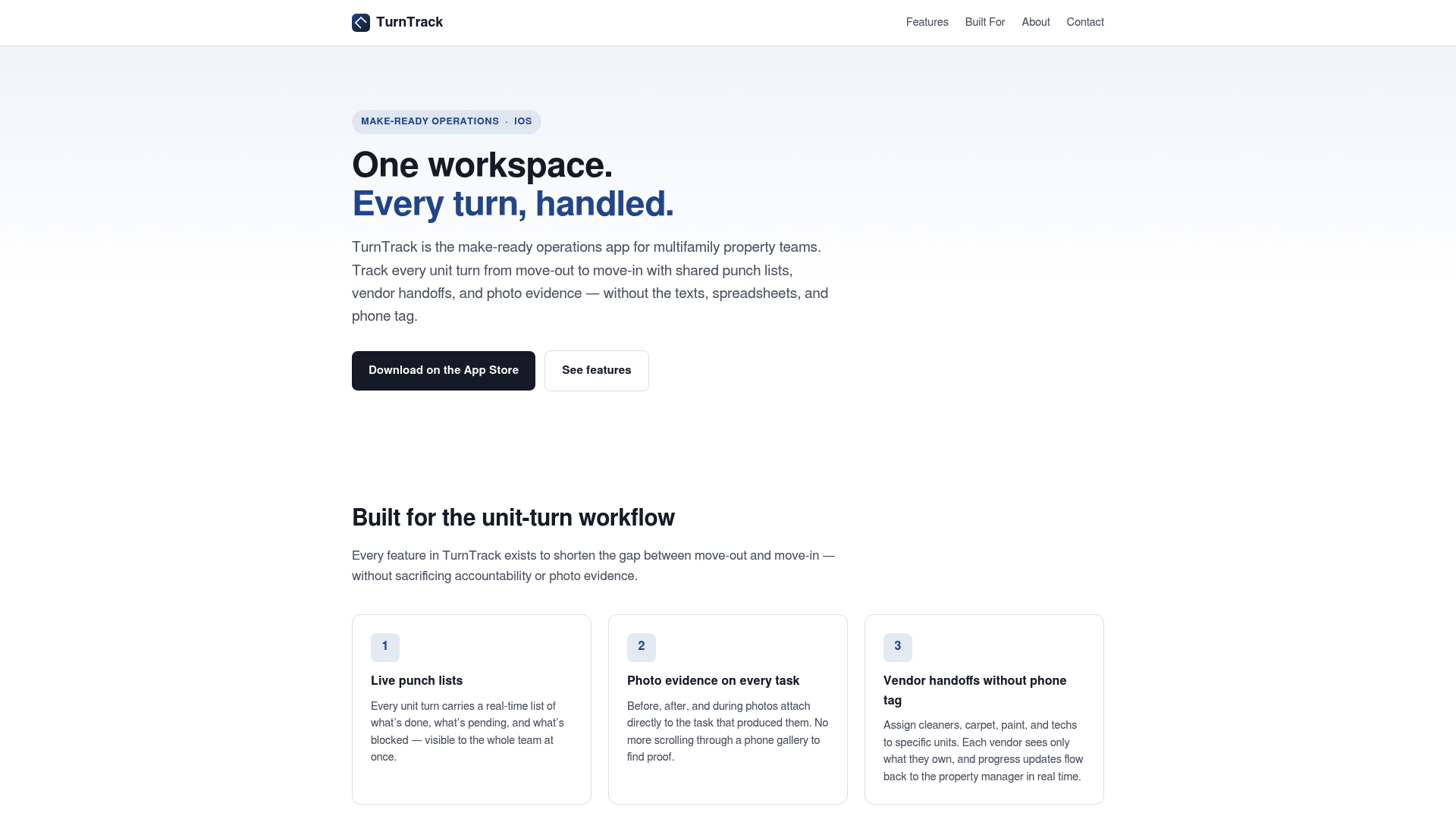
TurnTrack gives every turn a shared record with a visible status and a full timeline from Move-Out to Make-Ready. The make-ready workflow tool includes move-out, mid-turn, and move-in inspections walked area by area on a phone, an activity feed with optional photo documentation, and a Property Standards Library that puts unit-specific specs in front of every tech and vendor who needs them. One workspace subscription at $14.99/month covers your invited team, with a free trial available on iOS.
FAQ
What does make-ready mean in apartments?
Make-ready in apartments is the process of preparing a vacant unit for a new tenant after move-out. It includes inspection, repairs, deep cleaning, and a final quality walkthrough to confirm the unit meets habitability and property standards.
What is make-ready maintenance?
Make-ready maintenance refers to the repair and restoration work performed on a unit during the make-ready process. This includes fixing functional issues like plumbing and appliances, as well as cosmetic work like patching walls and touching up paint.
How long does a make-ready take?
A standard make-ready takes 3–5 days for a unit in average condition. Units with significant damage or complex repairs can take up to 10 days.
What is the difference between make-ready and apartment turnover?
Make-ready is the physical unit preparation phase only. Apartment turnover is the full cycle from a tenant giving notice through a new tenant moving in, which includes marketing, leasing, and screening in addition to the make-ready work.
What does make-ready cost?
Standard make-ready costs range from $1,000 to $5,000 per unit. Heavy turns with major damage or extensive repairs can exceed $8,000, depending on unit condition and regional labor rates.