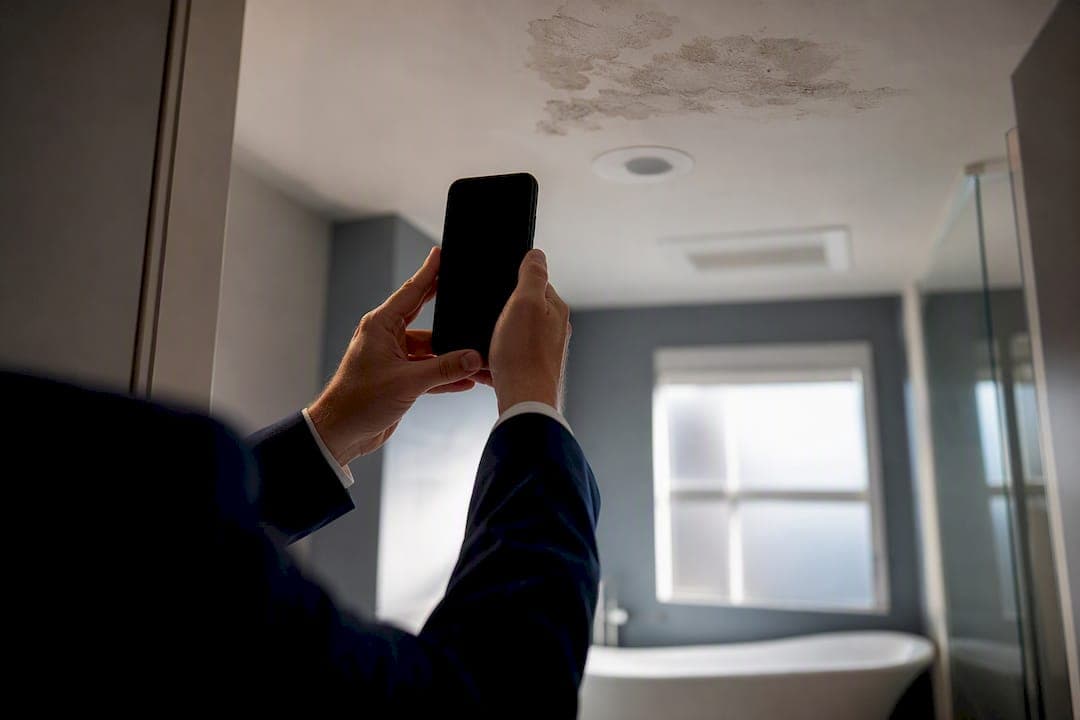
Send the tenant an itemized statement listing every deduction, backed by receipts or invoices and photos, before your state's deadline expires. That's the whole job in one sentence. Miss the deadline or skip the paper trail, and you can lose the right to keep any of the deposit, no matter how justified the charge.
Your itemized statement needs these fields at minimum:
- Tenant name, property address, and move-out date
- Original deposit amount and forwarding address on file
- A line-item list of deductions, each tied to a dollar amount
- The math: deposit minus deductions equals refund due
- Attached photos and receipts or invoices for each charge
Before you write a single line, pull your move-in inspection report, gather every move-out photo, collect contractor receipts, and run the numbers. Do that first, and the statement writes itself.
Key Takeaways
An itemized statement backed by dated photos, receipts, and delivery proof, sent within your state's deadline, is what actually protects a landlord's right to withhold any portion of a deposit.
| Point | Details |
|---|---|
| Deadline comes first | Send the itemized statement and attachments within your state's window, often 14 to 30 days, or risk forfeiting the deduction. |
| Every deduction needs a receipt | Attach an invoice, receipt, or time log to each line item; vague descriptions get rejected in disputes. |
| Photos need structure | Shoot wide, medium, and close shots, name files consistently, and pair move-in and move-out images of the same spot. |
| Delivery proof matters as much as content | Use certified mail, email with read receipts, or a signed hand-delivery acknowledgment, and keep the proof with your file. |
| TurnTrack builds the record during the turn | Photos and notes attach to inspection items as work happens, so the evidence packet is ready before the statement is due. |
Where to Verify Your State's Deposit Rules
Check your own state or local housing agency for exact deadlines and thresholds before finalizing any statement.
- California Civil Code §1950.5 for statutory deadline and receipt requirements
- California Courts' security deposit guide for tenant-facing dispute procedure
- LA County's security deposit resource for local-level rules
- LegalClarity's itemized statement template as a starting document
Table of Contents
- Legal Requirements for Security Deposit Charge Documentation
- What Can Landlords Legally Deduct From a Security Deposit?
- How to Document Damage With Photos That Hold Up
- Building an Itemized Statement That Won't Get Challenged
- How Long Should You Keep Deposit Records?
- How TurnTrack Helps Document Unit-Turn Evidence
- The Deadline Matters More Than the Deduction
- Turn Move-Out Documentation Into a Repeatable Workflow
- Sources
Legal Requirements for Security Deposit Charge Documentation
Most states give landlords a window of 14 to 30 days after move-out to send the itemized statement, though a handful allow longer. Miss that window and courts routinely treat the deposit as forfeited, sometimes with statutory damages stacked on top. California Civil Code §1950.5 sets the standard many other states echo: landlords must provide an itemized statement with copies of bills or receipts no later than 21 calendar days after the tenant vacates.
If repairs aren't finished by then, a good-faith estimate is acceptable, but California requires the actual receipts to follow within 14 days of completion. Skipping that follow-up step is one of the fastest ways to lose a deduction in a dispute.
A few rules to build your process around:
- Attach invoices or receipts for any deduction above your state's disclosure threshold.
- Deliver the statement by a method you can prove: certified mail with return receipt, email with read confirmation, or a signed hand-delivery acknowledgment.
- Keep a copy of the delivery proof with your file, not just the statement itself.
California Courts' self-help guidance confirms that photos from move-in and move-out strengthen a landlord's position considerably when a dispute reaches a hearing. Deadlines and thresholds vary by state, so confirm your own before you send anything.
What Can Landlords Legally Deduct From a Security Deposit?
Courts consistently reject deductions that read like guesses. "Cleaning: $200" without a receipt or photo gets tossed. Here's what actually holds up, category by category:
- Cleaning beyond normal turnover. Requires a cleaning invoice or your own time log, plus before-and-after photos showing the unit wasn't left in move-in condition.
- Damage repairs beyond ordinary wear and tear. Requires a contractor invoice or itemized materials receipt, close-up photos of the damage, and the move-in report showing the item was undamaged when the tenant took possession.
- Unpaid rent or fees. Requires the ledger showing the balance and the lease clause authorizing the charge.
- Replacement of damaged personal property (carpet, blinds, appliances) when the lease allows it. Requires the original purchase or install date so you can prorate for depreciation. A carpet installed six years into a ten-year expected life isn't billed at full replacement cost.
The single biggest documentation failure is vague language paired with no baseline. If you can't show what the unit looked like at move-in, a judge has no way to confirm the tenant caused the damage.
How to Document Damage With Photos That Hold Up
Photo evidence needs structure, not volume. Shoot a wide shot of the room, a medium shot of the damaged area, and a close-up of the specific defect, for every item you plan to charge for. FEMA's flood-damage documentation guidance recommends this same wide-medium-close sequence because it lets a reviewer verify location, extent, and detail without guessing.
Name your files by unit and date, not "IMG_4471.jpg." Preserve the originals with their metadata intact rather than only saving edited or cropped copies, since timestamp data is often what proves a photo was taken at move-out and not sourced from somewhere else.
Beyond the photos themselves:
- Link every image directly to its corresponding line item on the itemized statement.
- Pair each move-out photo with the matching move-in photo of the same spot, labeled clearly.
- Keep contractor estimates, mitigation timelines, and records of any temporary repairs (a leak patched before the real fix, for example).
- Record the sequence of events for anything urgent: what happened, when you found it, and what you did about it.
Pro Tip: Build one compact folder per deduction, containing the invoice, the two comparison photos, and a one-line note explaining the charge. That's the entire packet a mediator or judge needs to see, and it takes minutes to assemble if you organize as you go instead of scrambling after a dispute lands.
Building an Itemized Statement That Won't Get Challenged
Your statement needs a header with the tenant's name, property address, lease start and end dates, move-out date, original deposit amount, and the tenant's forwarding address. Below that, each deduction gets its own row with a short label, a specific description tied to a photo reference, the cost basis, and vendor contact information if a third party did the work.
| Line Item | Description | Cost Basis | Reference |
|---|---|---|---|
| Carpet replacement (partial) | Stained carpet in living room, beyond normal wear; prorated | Vendor invoice | Photo, invoice |
| Wall repair | Three drywall holes in bedroom from wall anchors | Contractor invoice | Photo, invoice |
| Deep cleaning | Kitchen grease buildup, oven interior | Cleaning service receipt $150 | Photo, receipt |
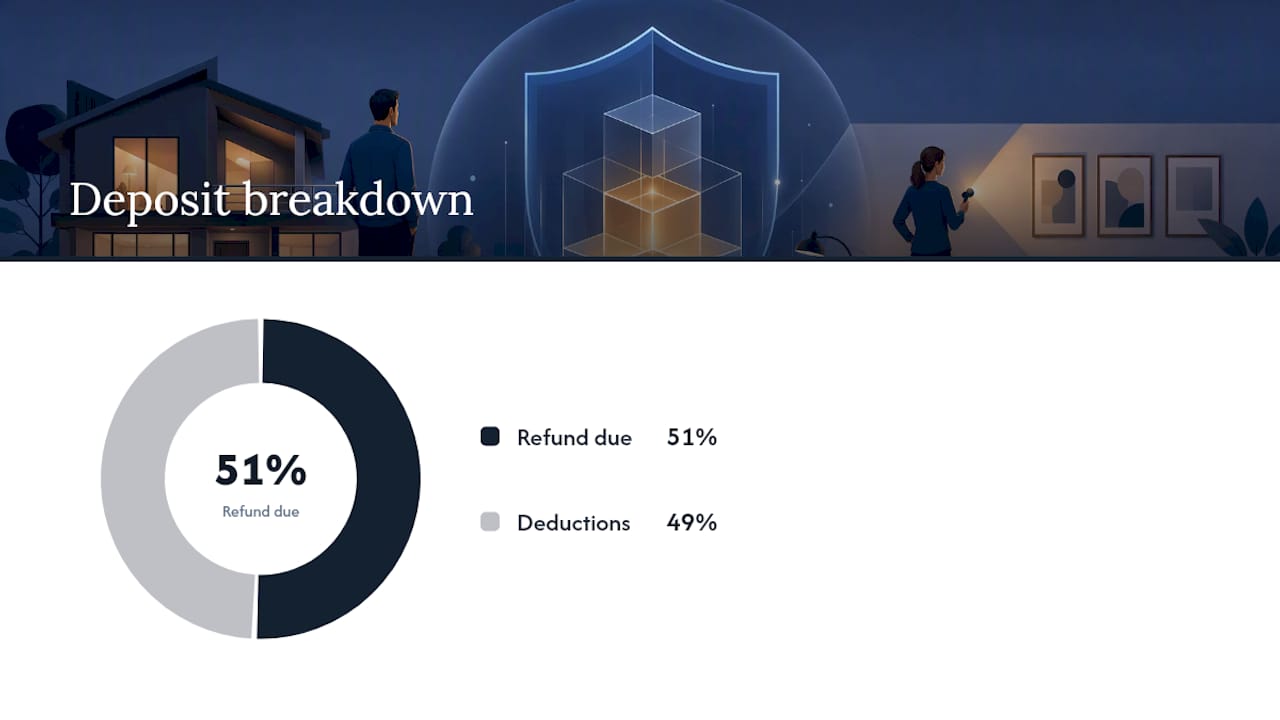
Reconciliation goes at the bottom: original deposit of $1,500, minus $740 in deductions, equals a $760 refund due. Show the subtraction, don't just state the total.
- Attach copies of every receipt and invoice referenced, not just the statement.
- If any file is large, a secure link works, but confirm the tenant can access it without an account.
- Send the complete packet together. A statement followed later by "forgotten" attachments looks disorganized at best and evasive at worst.
The LegalClarity itemized statement template follows this same structure and is worth using as a starting point if you're building your first version.
How Long Should You Keep Deposit Records?
Keep the full file for at least as long as your state's statute of limitations on deposit disputes, which commonly runs one to several years depending on the claim type. Courts and landlord-tenant guides, including the Texas State Law Library's landlord-tenant resources, point to proof of the original deposit amount (a canceled check, a receipt, or the lease clause itself) as one of the first things a hearing officer asks for.
Your proof-of-delivery method matters as much as the statement itself:
- Certified mail with a return receipt gives you a government-stamped delivery date.
- Email works if you save the read receipt and the full message headers, not just the sent copy.
- Hand delivery needs a signed acknowledgment from the tenant, dated on the spot.
Assemble one folder containing the move-in report, move-out photos, all receipts and invoices, the itemized statement, and your delivery proof. That folder is your entire small-claims defense.
How TurnTrack Helps Document Unit-Turn Evidence
Most of this documentation problem isn't a legal problem, it's a workflow problem. Evidence gets scattered across text threads, personal phones, and whoever's memory happens to still be accurate. TurnTrack, built for multifamily unit turns, attaches photos and notes directly to each inspection item as the turn happens, so the record builds itself instead of getting reconstructed weeks later.
- Move-Out, Mid-Turn, and Move-In inspections walk the unit area by area, creating a timestamped before/after record automatically.
- The activity feed logs the chronology: move-out, tech start, cleaners, carpet crew, final inspection, each entry timestamped as it happens.
- The Property Standards Library keeps consistent charge language and vendor details in one place, so "cleaning beyond normal wear" means the same thing on every statement you send.
Pro Tip: When it's time to write the itemized statement, pull the flagged photos and vendor invoices straight from the turn record instead of hunting through old messages. It's a workspace subscription at $14.99 a month, with a free trial, available now on iOS through the App Store. Android is on its way.
The Deadline Matters More Than the Deduction
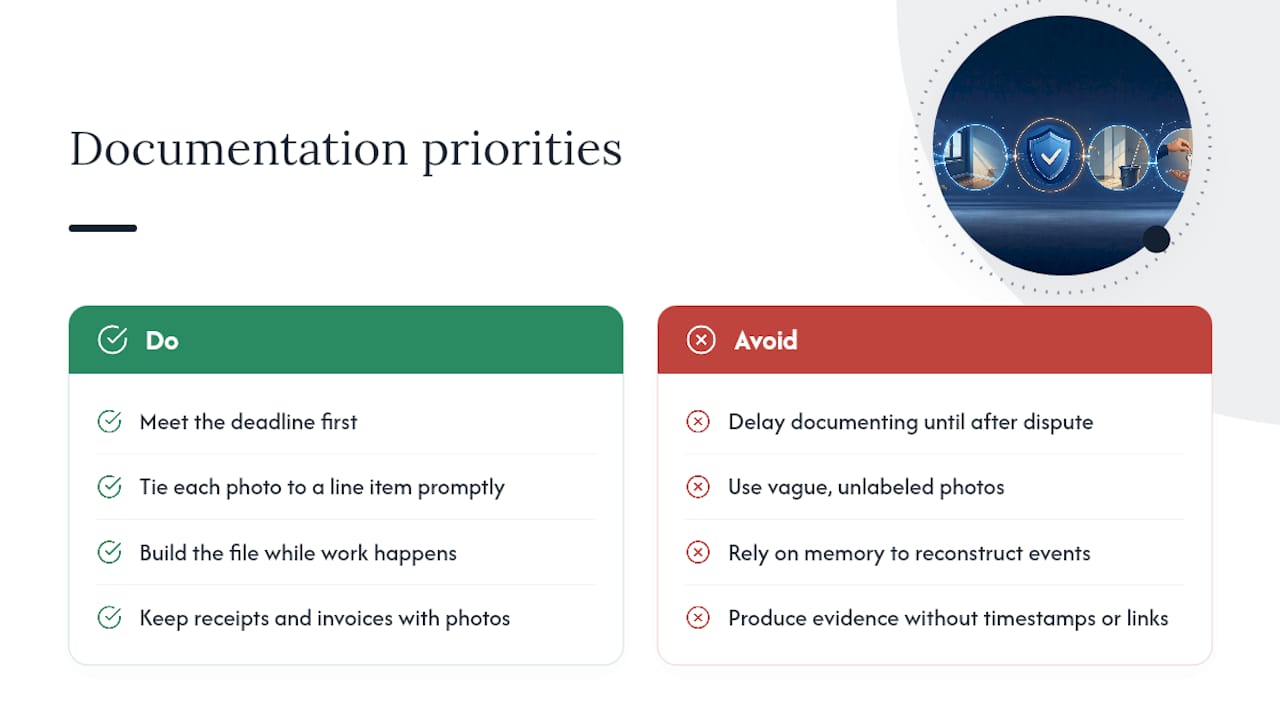
Landlords tend to obsess over whether a charge is "fair." Courts care far less about fairness and far more about whether you followed the process. A perfectly reasonable $300 carpet charge with no receipt loses to a questionable $150 charge backed by an invoice and two photos, every time.
The conventional advice, "keep good records," highlights the importance of detailed documentation. Vague folders full of unlabeled photos are often unhelpful in a hearing. What truly helps is a system that promptly ties each photo to a specific line item when damage is discovered, ensuring clarity and evidence integrity.
If we had to name the single biggest mistake in this space, it's treating documentation as something you do after the tenant disputes the charge. By then the paint's dry, the receipt's misplaced, and you're reconstructing a story instead of presenting evidence. The landlords who win disputes cleanly are the ones who built the file while the work was happening, not after.
Prioritize the deadline first, the evidence trail second, and the dollar amount last. Get the first two right and the third mostly takes care of itself.
Turn Move-Out Documentation Into a Repeatable Workflow
TurnTrack gives property teams a place to build the evidence trail while the turn is happening, not after a tenant disputes a charge. Every inspection item gets its own timestamped photo and note, so when it's time to write the itemized statement, the packet is already assembled instead of scattered across someone's camera roll.
The workspace runs $14.99 a month with a free trial, and it covers your whole invited team under one subscription. It's not a leasing or accounting tool. It's built specifically for the unit-turn workflow: inspections, vendor coordination, and the activity log that shows exactly what happened and when. When a tenant challenges a deduction, you export the tagged photos and notes tied to that unit's turn and hand over a packet that already matches your statement line by line.
Try the TurnTrack workspace on iOS and see how much faster the next move-out statement comes together.
Sources
- California Civil Code §1950.5
- Guide to security deposits in California — California Courts
- Document damage — FloodSmart (FEMA-related guidance)
- Free security deposit invoice template — LegalClarity