
Apartment make ready is the physical process of preparing a vacant unit for a new tenant, covering cleaning, repairs, paint, and flooring from the moment the prior resident leaves. The industry term is "unit turn," and the make-ready phase sits inside the broader turnover process, which includes marketing, leasing, and move-in. Getting the make-ready phase right is where property managers protect revenue. Every extra day a unit sits vacant is rent you cannot recover.
What does apartment make ready actually involve?
Make-ready strictly covers physical preparation. The broader turnover cycle, which includes finding a new tenant, runs roughly 2–6 weeks from move-out to move-in. The make-ready phase is the portion your team controls directly. That distinction matters because it tells you exactly where to focus your effort.
Make-ready durations fall into three tiers: light turns take 3–5 days, standard turns run 5–10 days, and heavy turns involving flooring and appliance replacement stretch 10–21 days. Knowing which tier a unit falls into before the prior tenant leaves is the first step toward hitting your deadline. A unit you scope on move-out day is already behind.
Full apartment turnover costs average $3,872 per move-out when you include lost rent. The make-ready portion alone runs $1,000–$5,000 per unit depending on scope and local labor rates. Those numbers make a strong case for treating every turn as a project with a defined scope, schedule, and owner.
Prerequisites and tools for an efficient turn
The work that happens during the tenant's notice period determines how fast the unit moves once keys are returned. A pre-move-out inspection lets you define scope, book vendors, and stage materials before day zero. Teams that skip this step spend the first two days of the turn figuring out what the last two days should have already answered.
The core tools every make-ready team needs:
- A written punch list tied to the unit, not just a tech's memory
- A condition report with photos from move-out inspection
- Vendor contacts confirmed and scheduled before move-out day
- Standardized paint colors, flooring SKUs, and filter sizes documented by property
- Common materials staged on-site: paint, caulk, outlet covers, HVAC filters
Standardizing specs is where most smaller operators leave time on the table. When a tech has to call the office to find out which Sherwin-Williams white goes on the walls, that call costs 20 minutes and breaks momentum. A property standards library that stores the exact paint code, faucet model, and preferred vendor by property eliminates that friction entirely.
Pro Tip: Book your carpet crew and cleaning crew before move-out day. Both trades fill up fast, and a two-day wait for a cleaner can push your rent-ready date by a full week.
| Resource | Purpose |
|---|---|
| Pre-move-out inspection | Define scope and book vendors early |
| Standardized punch list | Consistent quality across all techs |
| On-site material staging | Eliminate lead-time delays mid-turn |
| Property standards document | Reduce tech questions and rework |
| Confirmed vendor schedule | Prevent coordination gaps between trades |
How to execute a unit turn from move-out to rent-ready
A well-run turn follows a tight sequence. Overlapping tasks where possible is the difference between a 5-day turn and a 9-day turn.
-
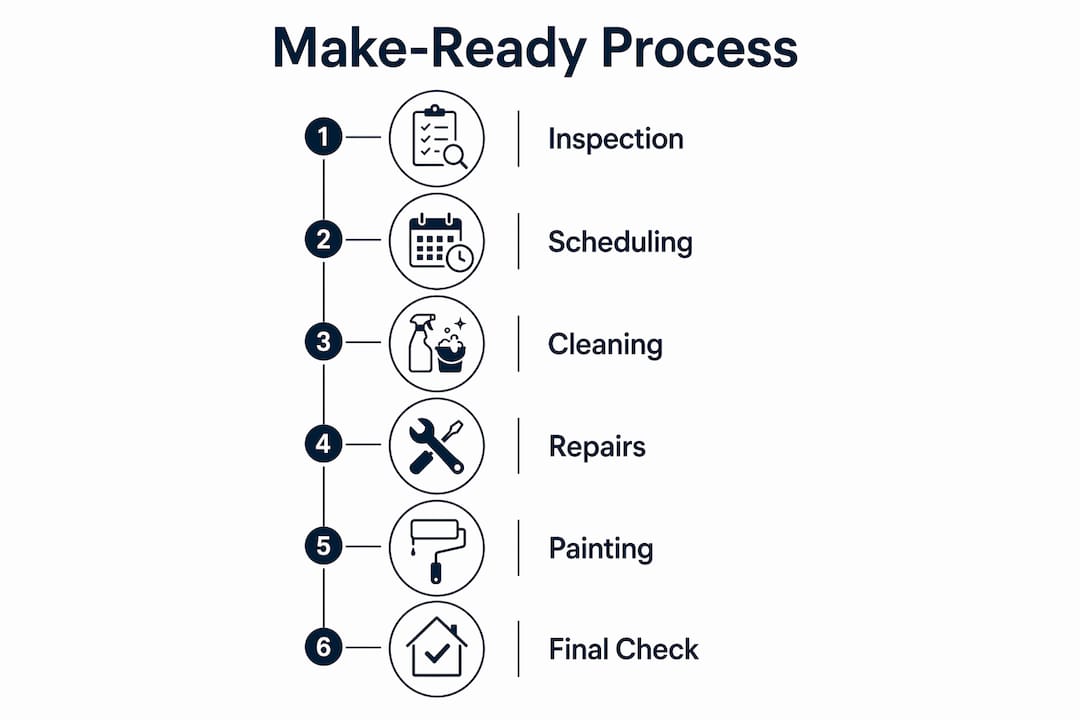
Day 0: Move-out inspection. Walk the unit area by area the moment keys are returned. Document condition with photos where the property requires it. Confirm the punch list against your pre-move-out scope. Any surprises found here need to be escalated to vendors immediately.
-
Day 1: Trash-out and junk removal. Remove all tenant belongings and debris before any repair work begins. Full-service junk removal requires an estimate visit, which can add 2–5 days of waiting. Curbside pickup services cut that to same-day service and cost significantly less. The unit must be clear before paint or repairs start.
-
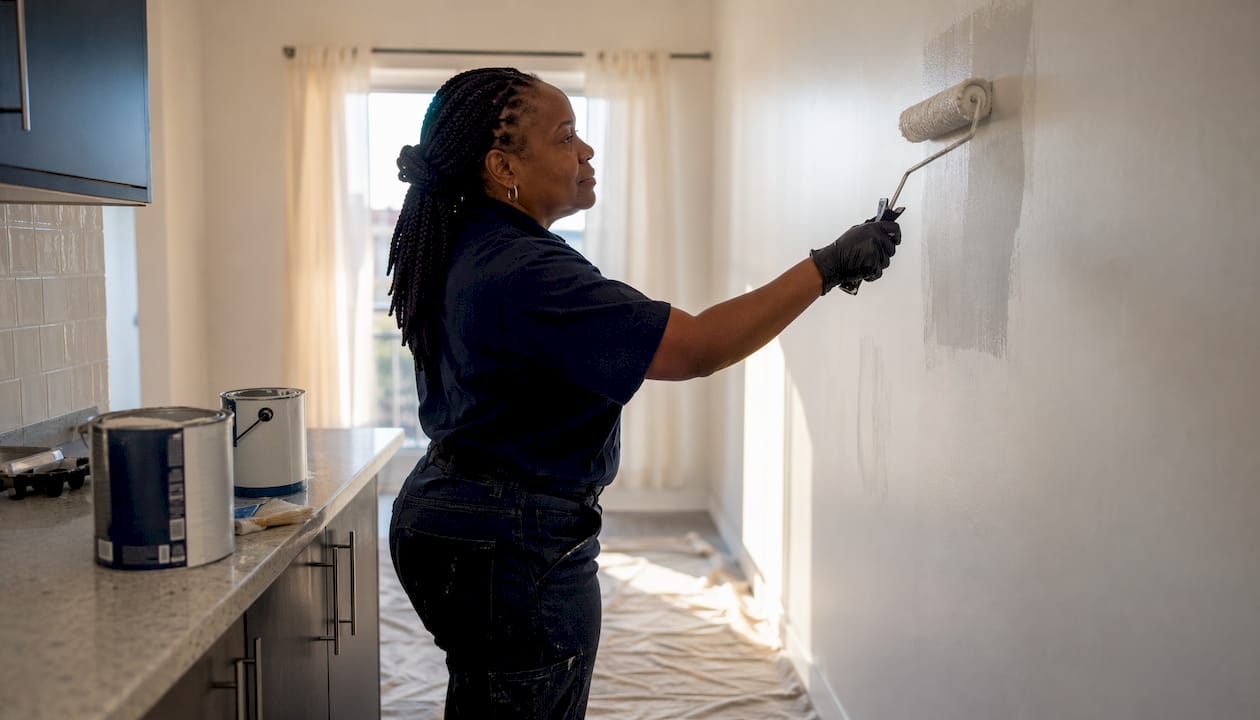
Days 2–4: Repairs, drywall, and paint. Sequence repairs before paint, always. Patching drywall after a painter has already rolled the walls creates rework. Fresh paint is the highest-impact, lowest-cost element in the entire make-ready process. It directly affects how fast a unit leases and at what rate.
-
Days 4–6: Flooring and appliances. Flooring goes in after paint dries. Appliance delivery needs to be confirmed before this window, not during it. Staging common flooring SKUs on-site removes the single biggest cause of heavy-turn delays. If you are waiting on a flooring order, you are not turning the unit.
-
Days 6–7: Deep clean, final walkthrough, and sign-off. Cleaning happens last, after all trades are done. The final walkthrough confirms every punch list item is closed. Photo documentation of completed items, such as a new smoke detector with the date written on it, creates a move-in record that protects the property in disputes.
Pro Tip: Overlap your cleaning crew with your final punch list walk. While the cleaner works the kitchen, you can close out the bedroom items. You recover a half-day without adding any cost.
What causes make-ready delays and how to fix them
60–75% of total make-ready time is coordination lag between tasks and trades, not actual labor. That means pushing your techs to work faster solves the wrong problem. The real fix is reducing the gaps between when one trade finishes and the next one starts.
The most common delay causes:
- Vendor scheduling gaps: cleaner arrives before flooring is done
- Material lead times: waiting on a flooring order or appliance delivery
- Junk removal delays: full-service estimate visits adding days before work begins
- Approval bottlenecks: property manager unavailable to authorize scope changes
- Missing specs: tech stops work to find out which paint or part to use
Reducing coordination lag between trades yields better vacancy reduction results than simply trying to speed up worker labor. The gap between "work done" and "unit ready" is almost always a scheduling problem, not a speed problem.
Junk removal is the most common first-day bottleneck. Switching to curbside pickup eliminates the estimate visit and gets debris removed the same day. That single change can recover two or more days on a standard turn.
For material delays, the fix is staging. Keep your most-used flooring SKU and a set of common appliance parts on-site. Staging materials on-site neutralizes vendor lead-time variability that routinely pushes heavy turns past two weeks.
Pro Tip: Set a 24-hour response SLA with every vendor you use regularly. If a vendor cannot confirm a schedule within 24 hours of your request, have a backup contact ready. One unresponsive vendor can cascade into a three-day delay.
What metrics tell you if your make-ready process is working?
Four KPIs tell the full story of a make-ready operation: days in make-ready, cost per turn, rework rate, and days vacant. Days in make-ready measures calendar time from key return to rent-ready. Cost per turn tracks total spend including labor, materials, and vendor fees. Rework rate flags quality failures that add days and cost. Days vacant captures the full revenue impact.
The gap between hands-on labor time and total calendar time is the most revealing number. If your techs are doing two days of actual work but the unit takes eight days to turn, you have six days of coordination lag. That is the number to attack. A detailed apartment turnover checklist tied to each unit helps close that gap by keeping every trade accountable to a shared timeline.
Dedicated make-ready technicians outperform general maintenance staff on turns. A tech whose only job is unit turns moves faster and makes fewer errors than one splitting time between turns and service requests. For high-turnover portfolios, the ROI on a dedicated make-ready tech is clear.
Technology tools purpose-built for unit turns give service managers visibility across all active turns at once. TurnTrack tracks every turn with a status (Ready, On Track, At Risk, Overdue) and a shared timeline from Move-Out through Tech Start, Cleaners, Carpet, Inspection, and Make-Ready. Vendor contacts live inside each turn record, so a tech who needs the carpet crew does not dig through a phone or a separate list. The Property Standards Library stores the exact paint code, HVAC filter size, and preferred vendor for each property, shareable to a tech or vendor without requiring them to have a TurnTrack account.
Pro Tip: Track rework rate by tech and by vendor. A vendor who consistently requires a callback is costing you more than their invoice shows. One rework on a flooring job can add two days and $300 to a turn.
Key Takeaways
Reducing coordination lag between trades, not labor speed, is the single most effective way to cut apartment make-ready time and protect rental revenue.
| Point | Details |
|---|---|
| Start before move-out | Pre-move-out inspections and vendor booking compress the turn calendar significantly. |
| Sequence tasks correctly | Repairs before paint, paint before flooring, flooring before cleaning. Rework from wrong sequencing adds days. |
| Attack coordination lag | 60–75% of make-ready time is waiting between trades, not active labor. Fix scheduling, not speed. |
| Stage common materials | Keeping flooring SKUs and parts on-site eliminates lead-time delays that extend heavy turns past two weeks. |
| Track the right KPIs | Days in make-ready, cost per turn, rework rate, and days vacant together reveal where the process breaks down. |
What nine years in the field taught me about make-ready
The operators who run the tightest turns are not the ones with the fastest workers. They are the ones who treat every turn as a project with a defined scope and a confirmed vendor schedule before the prior tenant leaves. That shift in mindset is worth more than any tool or tactic.
Fresh paint gets underestimated constantly. It is the single highest-return item in the entire make-ready budget. A unit with fresh paint leases faster and commands a better rate. Skipping it to save $200 in materials is a false economy when the unit sits an extra week.
The other thing I have seen consistently: front-loading inspections pays off every time. Teams that start scoping the unit during the notice period capture 5–10 days of lead time that teams waiting until move-out day simply cannot recover. That lead time is the difference between a 7-day turn and a 12-day turn on a standard unit.
Coordination is the job. The labor is the easy part.
— TurnTrack Team
TurnTrack for apartment make-ready teams
Running 5–15 active turns at once across texts, emails, and spreadsheets means vendors get missed and units get shown before they are ready. TurnTrack gives every turn a shared record with a live status and a timeline the whole team can see.
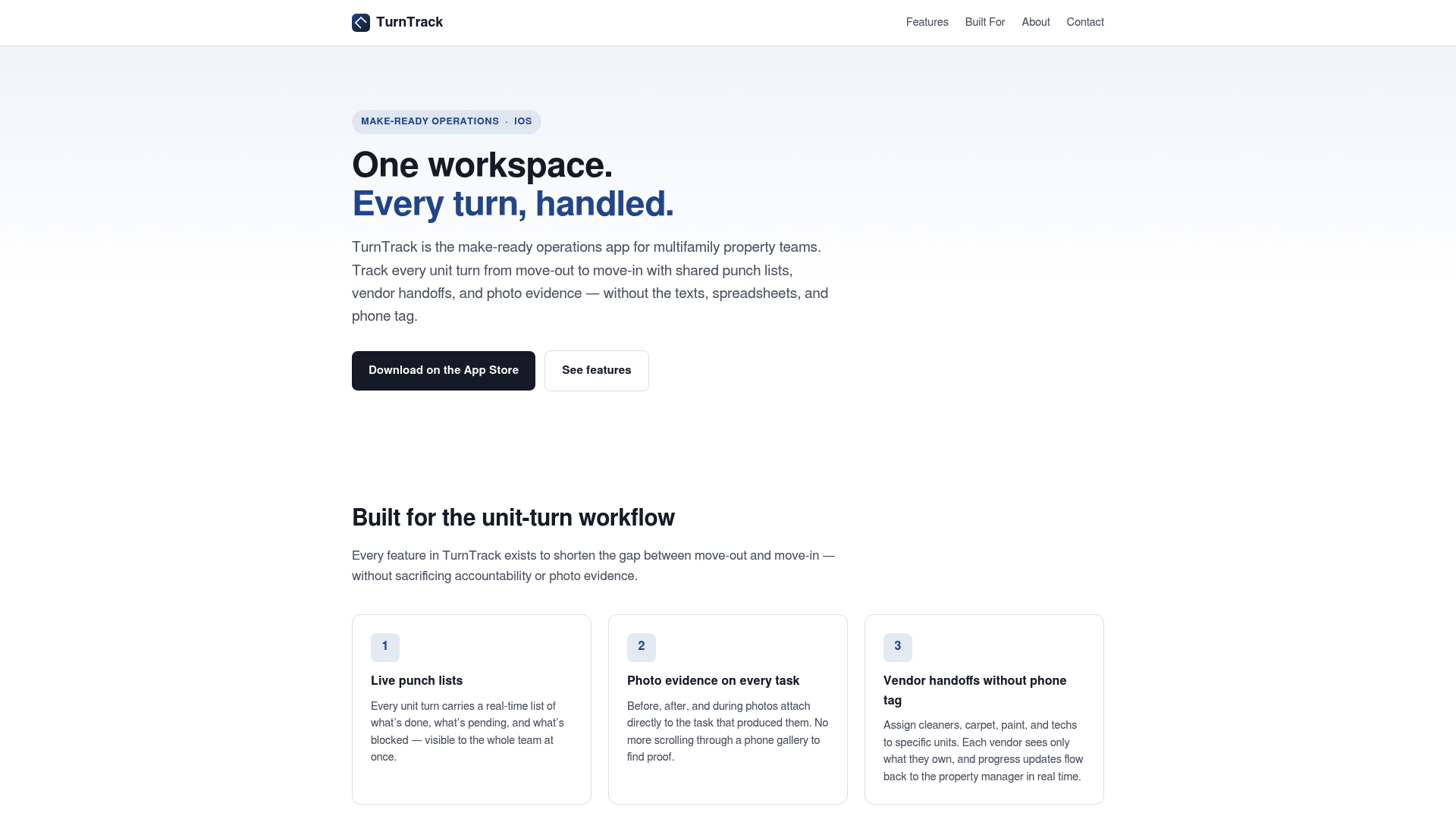
Vendor contacts live inside each turn. The Property Standards Library keeps your paint codes, filter sizes, and preferred vendors in one place, shareable to any tech or vendor without requiring them to create an account. Inspections are walked on a phone, area by area, building a before-and-after record as a byproduct of the work. TurnTrack is available on iOS with a free trial and a workspace subscription at $14.99/mo. One subscription covers your invited team.
FAQ
What is apartment make ready?
Apartment make ready is the physical preparation of a vacant unit for a new tenant, including cleaning, repairs, paint, and flooring. It is the hands-on portion of the broader turnover process, which also includes marketing and leasing.
How long does a make-ready take?
Light turns take 3–5 days, standard turns run 5–10 days, and heavy turns involving flooring or appliance replacement take 10–21 days. Starting the scope and vendor booking before move-out day is the most reliable way to hit the shorter end of those ranges.
What is the difference between make-ready and apartment turnover?
Make-ready covers physical unit preparation only. Turnover includes the full resident replacement cycle, from move-out through marketing, leasing, and move-in, and runs roughly 2–6 weeks in total.
What causes the most delays in a make-ready?
Coordination lag between trades accounts for 60–75% of total make-ready time. Junk removal scheduling and material lead times for flooring and appliances are the most common specific bottlenecks.
How much does apartment make ready cost?
Make-ready costs range from $1,000 to $5,000 per unit depending on scope and local labor rates. Full apartment turnover, including lost rent, averages $3,872 per move-out.