
The make ready experience is the structured, deadline-driven process of preparing a vacant rental unit for a new resident through coordinated cleaning, repairs, painting, and quality assurance. In multifamily housing, this process goes by its industry term: the unit turn. A well-executed turn minimizes vacancy days, protects leasing performance, and sets the condition record that protects the property from move-in disputes. Property managers who treat this as a logistics operation rather than a maintenance task consistently outperform those who don't.
What does the make ready experience involve?
The make ready experience is distinct from routine maintenance. Where maintenance responds to a work order, a unit turn follows a fixed sequence against a hard deadline. The goal is a rent-ready unit: clean, repaired, painted, and inspected before the next resident walks through the door.
A professional make-ready requires completion of deep cleaning, touch-up or full repaints, minor repairs, fixture replacements, and a final walkthrough against a standardized punch list by a fixed deadline. Missing that deadline directly hurts leasing performance. Every extra vacancy day is lost revenue with no way to recover it.
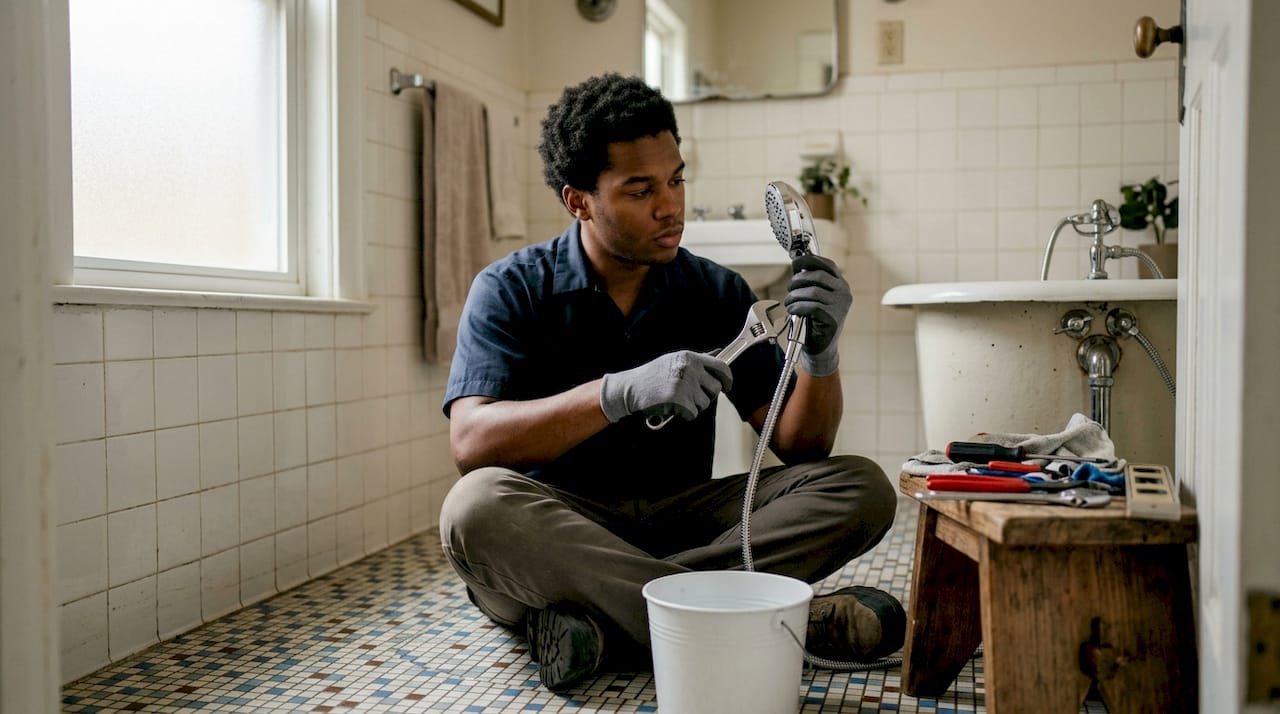
The punch list is the backbone of this process. It defines exactly what "rent-ready" means for your property, covering every room, system, and surface. Without a written standard, quality becomes whoever showed up that day, and that creates liability.
Who is involved in the make ready process and what are their roles?
A unit turn involves at least three distinct roles, and confusing them creates delays.
Make-ready technicians are specialists. They do not respond to resident work orders. Their job is to move through vacant units executing the punch list: cleaning kitchens and bathrooms, patching drywall, painting, replacing hardware, and completing the final walkthrough. A make-ready technician specializes exclusively in preparing vacant units for move-in, earning between $13.69 and $28.24 per hour with a national average near $19.66 as of mid-2026. That pay range reflects the breadth of skills the role demands across multiple trades.
Service coordinators own the schedule. They sequence vendors, track deadlines, and catch problems before they cascade. When a carpet crew shows up before the painter finishes, that is a coordinator failure, not a vendor failure.
Specialty vendors handle work outside the technician's scope: carpet replacement, appliance repair, HVAC service, and professional cleaning on larger units. They operate on their own schedules, which is exactly why coordination is the hardest part of the job.
- Make-ready techs execute the punch list and report completion by area
- Service coordinators schedule and sequence all parties against the move-in date
- Specialty vendors handle trade-specific tasks and must be sequenced correctly
- Property managers set the standard and approve the final walkthrough
Pro Tip: Make-ready technician roles often serve as entry-level positions that build broad repair experience across multiple units. Promoting from within creates supervisory candidates who already know your property standards.
What are the standardized steps in a professional make ready?
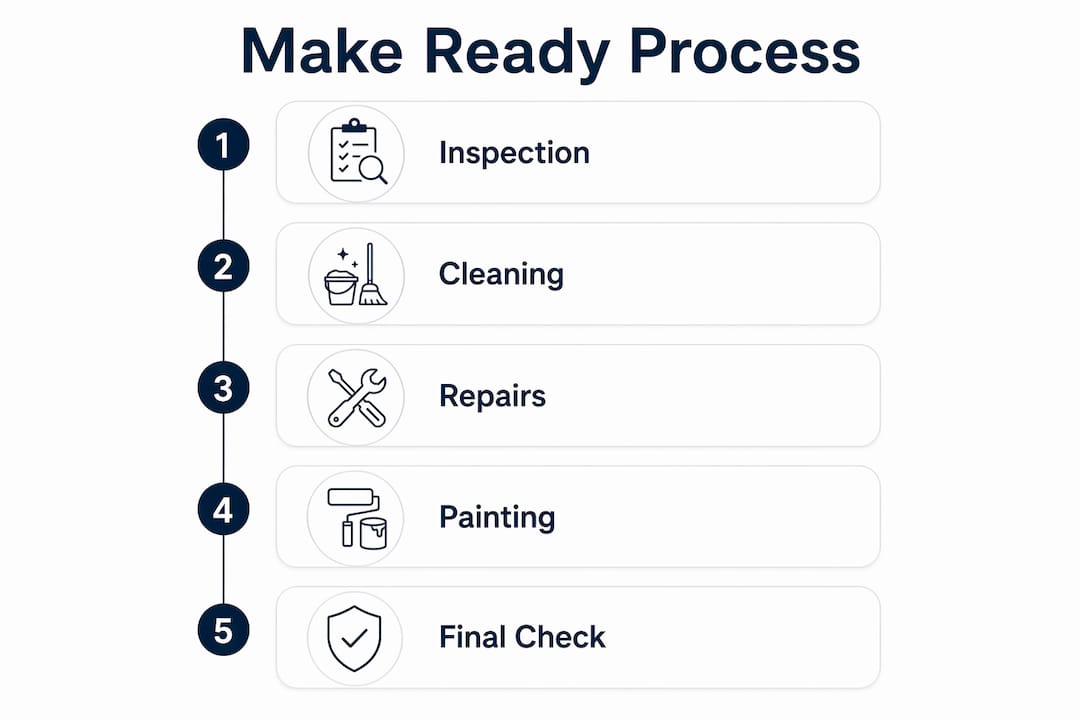
A professional punch list follows a logical sequence. Skipping steps or reordering them creates rework. Painters should never work in a unit the cleaners haven't finished. Inspectors should never sign off before the punch list is complete.
- Move-out inspection. Walk the unit area by area and document existing condition with notes and, where your property requires it, photos. This record protects you in deposit disputes.
- Deep cleaning. Kitchens get degreased inside appliances, under burners, and behind the refrigerator. Bathrooms get scrubbed to bare surface. Floors, baseboards, and vents get cleaned before any other work begins.
- Drywall and surface repairs. Patch holes, fix scuffs, and address any water damage before paint goes on. Painting over unrepaired surfaces is the most common shortcut that shows up in move-in complaints.
- Painting. Determine touch-up versus full repaint based on condition, not cost alone. A partial repaint that doesn't match the existing wall color creates a worse impression than a full repaint would have.
- Fixture and hardware replacement. Swap out worn cabinet pulls, broken blinds, damaged outlet covers, and any fixture that fails the property standard. Small details signal overall quality to a prospective resident.
- Appliance check. Test every appliance for function. Replace or repair anything that doesn't meet standard. A broken dishwasher discovered on move-in day destroys the first impression.
- Final walkthrough. Walk the unit against the punch list with fresh eyes. Sign off only when every item is resolved. A standardized punch list executed against a fixed deadline is what separates a professional turn from a rushed one.
Meeting the deadline on every one of these steps is what keeps the leasing calendar intact. One delayed turn can push a move-in date, which costs rent and damages trust with the incoming resident.
How do staffing decisions impact the efficiency of the make ready process?
Staffing is where most operators either overspend or underperform. The right model depends on your turn volume, geography, and how consistent that volume is across the year.
In-house technicians are optimal for frequent, steady, concentrated turns. Outside crews serve seasonal or geographically spread portfolios better. Misaligned staffing leads to overspending during slow periods or missed deadlines during peak ones.
| Staffing model | Best fit | Key tradeoff |
|---|---|---|
| In-house technician | High, steady turn volume in one location | Fixed labor cost even during slow periods |
| Outside contracted crew | Seasonal or dispersed portfolio | Less control over scheduling and quality |
| Hybrid model | Variable volume with a core workload | Requires strong coordination to manage both |
The hybrid model is the most common choice for mid-size operators. You keep one or two in-house techs for the steady baseline and call in outside crews during peak months. The risk is coordination overhead. When you're managing both in-house staff and outside vendors, communication gaps multiply.
Pro Tip: Before hiring an in-house make-ready tech, track your turn volume for 90 days. If you're averaging fewer than two turns per month, an outside crew almost always costs less when you factor in wages, benefits, and idle time.
What communication and technology practices improve the make ready experience?
Communication failure is the primary vulnerability in any unit turn. When a vendor doesn't know the paint code, when a tech can't reach the coordinator, or when the carpet crew shows up before the unit is clean, the delay compounds. Centralizing vendor contacts, paint codes, and appliance specs within each unit's turn record prevents these gaps when key personnel are unavailable.
The best teams treat each turn as a project with a shared record that everyone can see. Here is what that record needs to contain:
- Unit status tracked in real time: Ready, On Track, At Risk, or Overdue. Binary ready/not-ready tracking misses the window for early correction.
- A visible timeline covering every stage from move-out through final inspection, so every party knows what comes next and when.
- Vendor contacts tied to the turn, not stored in someone's phone. If the carpet crew's number lives only in the coordinator's contacts, the tech can't reach them when the coordinator is off.
- A Property Standards Library with exact paint colors, HVAC filter sizes, faucet models, and preferred vendors. A tech asking "what white goes on these walls?" should get the answer from the spec sheet, not a phone call.
- Photo documentation at critical checkpoints only. Excessive mandatory photo requirements lead to technician pushback and incomplete records. Limit photo verification to safety devices, final inspections, and any item with dispute risk.
The fastest unit turn workflows use nuanced status tracking rather than simple binary states, enabling proactive visibility and early corrective action. That single shift, from "done or not done" to "on track, at risk, or overdue," gives coordinators the lead time to fix problems before they become missed deadlines.
TurnTrack is built around exactly this structure. Every turn gets a shared record with a status and a timeline. Vendor contacts live inside the turn. The Property Standards Library keeps specs in one place and shares them to a tech or vendor without requiring them to have a TurnTrack account. Photos attach to inspection items and activity updates where the property requires them, not automatically on every task. For a closer look at how this fits into the broader make-ready workflow, the operational logic holds regardless of the tool you use.
Key Takeaways
A professional make ready experience requires dependency-aware scheduling, centralized documentation, and the right staffing model aligned to your actual turn volume.
| Point | Details |
|---|---|
| Define "rent-ready" in writing | A standardized punch list removes quality variation and protects against move-in disputes. |
| Match staffing to turn volume | In-house techs suit steady, concentrated volume; outside crews fit seasonal or dispersed portfolios. |
| Sequence contractors correctly | Painters before inspectors, cleaners before painters. Wrong sequencing creates rework and delays. |
| Centralize all turn information | Vendor contacts, paint codes, and specs belong in the unit record, not in someone's phone. |
| Limit photo requirements | Require photos at critical checkpoints only. Mandatory photos on every task reduce compliance, not increase it. |
The part of make-ready most operators get wrong
After 9+ years running turns in the field, the pattern is clear: most make-ready failures are not skill failures. They are sequencing failures. The tech knew how to paint. The carpet crew knew how to install. The problem was that nobody owned the order of operations, and nobody had a single place to see what was happening across all active units at once.
The instinct is to add more documentation to fix this. Require photos of everything. Build a longer checklist. Add more approval steps. That instinct is wrong. High-performing teams carefully limit photo documentation requirements to critical tasks, avoiding overwhelming technicians and ensuring documentation is a tool, not a burden. When you require a photo of every light switch, you get a folder full of light switch photos and a tech who stops taking the process seriously.
What actually works is consolidating information. One record per turn. One place where the vendor's number lives, where the paint code lives, where the inspection result lives. When the coordinator is out sick and the carpet crew calls, the tech should be able to pull up the turn record and answer the question without making three phone calls. Successful make-ready management depends on consolidating all related data within the unit's turn record to prevent delays and communication breakdowns.
The other thing worth saying: treat the move-out inspection as the foundation of the entire turn, not a formality. A thorough condition record at move-out is what makes the punch list accurate, what protects you in deposit disputes, and what tells the tech exactly what the unit needs before they set foot in it.
— TurnTrack Team
TurnTrack for multifamily make-ready teams
Running 5–15 active turns at once means tracking move-out dates, deadlines, techs, vendors, and unit-specific conditions simultaneously. Without a shared tool, that information lives in texts, emails, and people's memory. Vendors get missed. Units get shown before they're ready.
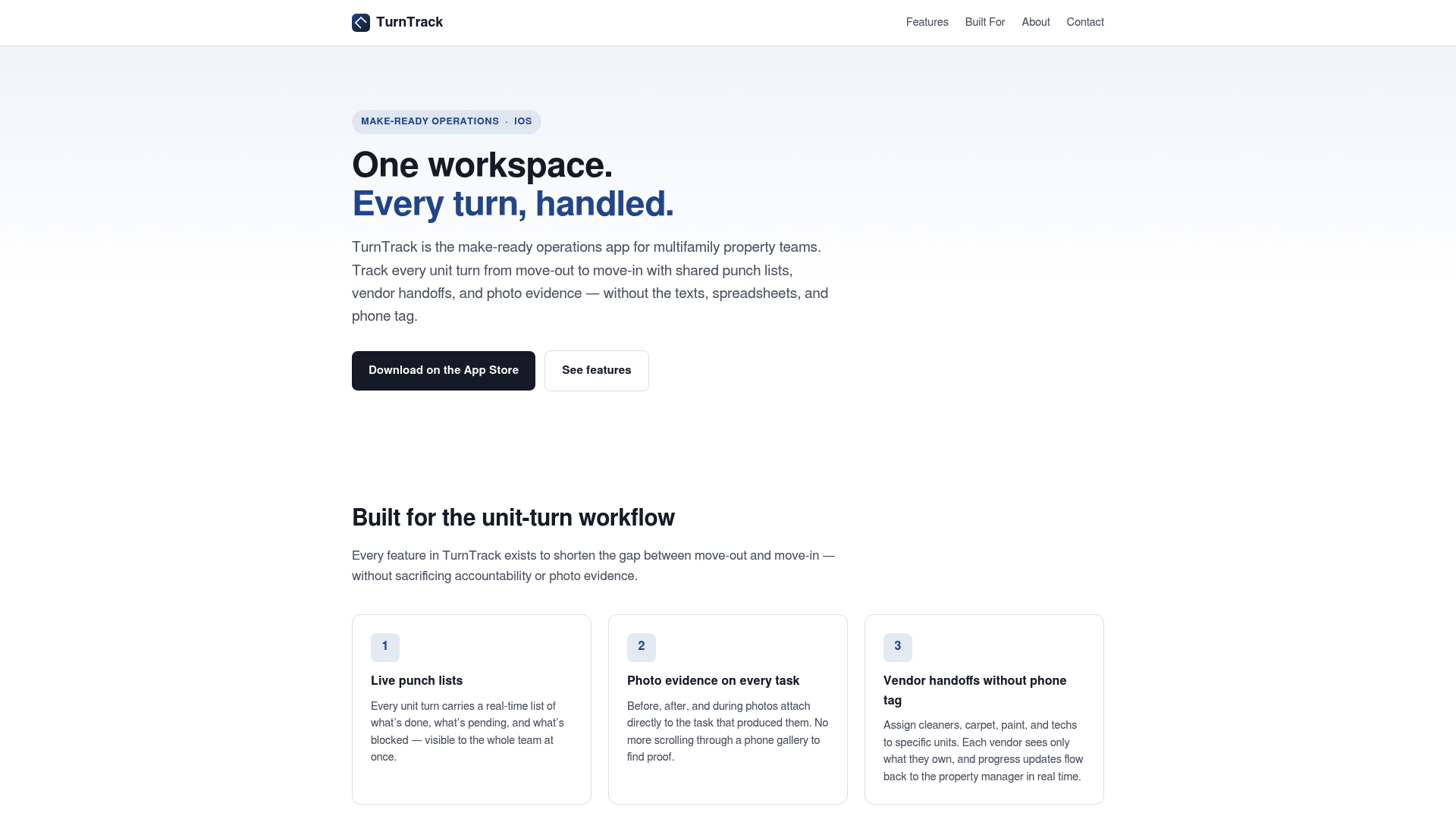
TurnTrack gives every turn a shared record with a status and a full timeline from Move-Out through Make-Ready. Vendor contacts live inside the turn. The Property Standards Library keeps your exact paint colors, filter sizes, and fixture specs in one place and shares them to any tech or vendor without requiring them to create an account. Inspections are walked on a phone, area by area, building a before-and-after condition record as a byproduct of the work. The workspace subscription runs $14.99 per month with a free trial, and covers your invited team on iOS. No enterprise contract. No overbuilt feature set.
FAQ
What is the make ready experience in multifamily housing?
The make ready experience is the process of preparing a vacant rental unit for a new resident through cleaning, repairs, painting, fixture replacement, and a final punch list inspection. It is a deadline-driven workflow distinct from routine maintenance.
How long does a typical unit turn take?
Turn time varies by unit condition, size, and staffing, but most professional make-readies on a standard apartment run two to five days when contractors are properly sequenced and the punch list is complete before work begins.
What is a make-ready technician?
A make-ready technician specializes exclusively in preparing vacant units for move-in, handling cleaning, painting, minor repairs, and punch list execution. Pay ranges from $13.69 to $28.24 per hour nationally as of mid-2026.
When should a property use outside vendors instead of in-house techs?
Outside contracted crews are the better fit for seasonal turn spikes or portfolios spread across multiple locations. In-house technicians make financial sense only when turn volume is high and consistent enough to keep them fully utilized.
What is a Property Standards Library?
A Property Standards Library is a centralized record of property-specific specs including exact paint colors, HVAC filter sizes, faucet models, and preferred vendors. It prevents repeated interruptions when techs or vendors need unit-specific information during a turn.