
Make ready concerns in property management refer to the preparation challenges that arise when turning a rental unit between tenants, covering everything from trade sequencing and vendor coordination to legal documentation and compliance. The industry term for this process is "unit turnover" or "make-ready," and both terms appear throughout this guide. Resolving these concerns directly determines how fast a unit returns to market and how much rental income a property retains. With California AB 2801 now in effect and flat-rate turnover windows targeting 24–72 hours post-move-out, the stakes for getting this right have never been higher.
What are the most common make ready concerns faced by property teams?
The most frequent readiness challenges fall into five categories, and most of them compound each other when left unaddressed.
- Trade sequencing failures. Cleaners arrive before repairs finish. Painters show up before patching is done. Each misstep pushes the next trade back by a full day, not just a few hours.
- Incomplete scope at move-out. Without a standardized punch list walked at move-out, techs start work without a clear picture of what the unit actually needs. Overlooked repairs surface late, after other trades have already been through.
- Material and resource delays. A tech shows up ready to work and the HVAC filter is the wrong size, or the paint color is unknown. That unit sits idle while someone tracks down the right spec.
- Cutting corners on cleaning and inspection. A rushed clean that misses baseboards or appliance interiors creates a problem at move-in. A skipped final walkthrough means defects reach the new tenant.
- Compliance gaps in documentation. Under California Civil Code §1950.5 and AB 2801, landlords must provide timestamped photo evidence to support any deposit deduction. Missing that documentation eliminates the legal basis for the charge.
Pro Tip: Walk every unit at move-out with a standardized checklist before scheduling any trades. The 20 minutes spent at move-out saves two days of rework later.
The most dangerous of these concerns is the documentation gap. Property managers who complete excellent physical work but skip photo documentation lose deposit disputes they should win. The work happened. They just cannot prove it.

How do operational inefficiencies and poor coordination contribute to make ready concerns?
Idle time between trades is the single largest driver of extended vacancy periods. A unit that should turn in two days stretches to five when trades are not sequenced and materials are not staged in advance.
The typical failure pattern looks like this:
- Move-out inspection is skipped or informal, so the scope is unclear.
- Cleaning is scheduled first because it is the most obvious task, but repairs have not been completed.
- The carpet crew arrives and cannot work because cleaning is not finished.
- Paint delivery is delayed because no one confirmed the color spec before ordering.
- Final inspection is rushed or skipped entirely because the leasing team is already showing the unit.
Each step in that sequence is a separate, fixable problem. Together, they turn a 48-hour turn into a week-long vacancy.
Centralizing property-specific specifications for vendors prevents administrative delays and material wait times. Avoiding "islands of preparation" by consolidating specs reduces idle time and synchronization issues between trades.
The fix is not more urgency. It is better sequencing and a single shared record that every trade can reference. When the carpet crew knows the unit status, the cleaner's finish time, and the vendor contact without making a phone call, idle time drops. That is the operational discipline that separates a 48-hour turn from a 5-day one.
What legal and compliance challenges affect make ready concerns in 2026?
California AB 2801, effective in 2025, fundamentally changed the documentation standard for make-ready work. The law requires photo documentation with timestamps for any cleaning or damage deduction taken from a tenant's security deposit. This is no longer a best practice. It is a legal requirement.
The practical implication is significant. A landlord who replaces a damaged faucet, repaints a wall, or deep-cleans an oven must now attach dated photos to the itemized deduction. Generic invoices with line items like "turnover cleaning: $350" no longer hold up in a dispute. The make-ready task bundle has become a legally recognized document under AB 2801.
| Documentation requirement | Legal standard | Risk if missing |
|---|---|---|
| Pre-move-out photos | Required before tenant vacates | Deposit deductions may be voided |
| Post-move-out photos | Required within a reasonable time | No basis for damage claims |
| Timestamped evidence | Required per AB 2801 | Audit and dispute vulnerability |
| Itemized invoices | Required per Civil Code §1950.5 | Deductions legally unenforceable |
Pro Tip: Attach photos directly to each task at the time of completion, not at the end of the turn. Retroactive documentation is harder to timestamp credibly and easier to challenge.
The compliance gap is not limited to California. Even in states without AB 2801 equivalents, detailed invoicing and photo evidence reduce dispute risk and support audit defensibility. The standard is moving in one direction across the country.
What best practices can property teams use to address make ready concerns?
The most effective approach to resolving preparation issues combines standardized process, pre-staged materials, and documented execution. No single tactic fixes the problem. The combination does.
- Use flat-rate bundled make-ready services where available. Bundled vendors typically cost 40–60% less than separately scheduled trades for the same scope. One accountable party also reduces coordination overhead significantly.
- Build and use a standardized make ready checklist. The checklist should cover every area of the unit, from smoke detector batteries to faucet aerators to paint touch-up. It should be walked at move-out, not assembled from memory mid-turn.
- Stage materials before the first trade arrives. Confirm the paint color, HVAC filter size, and any replacement parts before scheduling work. A tech who arrives to a unit with everything needed finishes the same day.
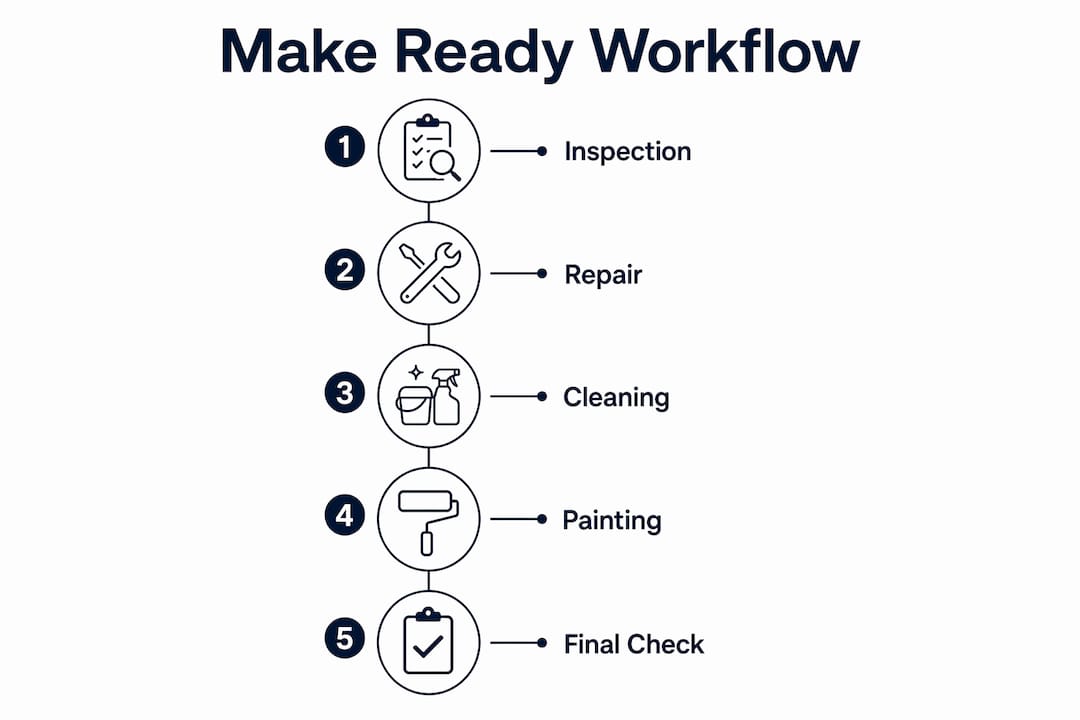
- Sequence trades in logical order. Repairs first, then cleaning, then paint touch-ups, then carpet, then final inspection. Any deviation from this sequence creates rework.
- Build a dedicated transition window before final inspection. A transition window between production and inspection gives the team time to catch defects before the leasing team walks the unit. Rushing from last trade directly to showing is how problems reach new tenants.
- Review past turnover cycles for root causes. Recurring issues like the same vendor always running late or the same unit type always needing extra cleaning signal a systemic problem. Reviewing root causes rather than isolated events reduces the same delays from repeating.
The make-ready priority framework used by experienced operators treats the unit as market-ready at the moment of move-out. That means the leasing team can begin marketing immediately, and the maintenance team works against a known deadline rather than an open-ended timeline.
Property managers who run 5–15 active turns at once need more than a checklist. They need a shared record that shows every unit's status, every trade's position in the sequence, and every outstanding task. Without that, coordination lives in texts and memory, and the first person to go on vacation takes the whole system down with them.
Key takeaways
Resolving make ready concerns requires sequenced trade coordination, pre-staged materials, standardized documentation, and legal compliance built into the workflow from move-out to move-in.
| Point | Details |
|---|---|
| Sequence trades correctly | Repairs before cleaning, cleaning before paint, paint before carpet, then inspect. |
| Document every deduction | Timestamped photos per AB 2801 are legally required for deposit claims in California. |
| Pre-stage materials | Confirm paint color, filter size, and parts before the first tech arrives to eliminate idle time. |
| Use a standardized checklist | Walk every unit at move-out with a written scope to prevent overlooked repairs surfacing late. |
| Build a transition window | Allow time between the last trade and final inspection to catch defects before leasing shows the unit. |
What experienced operators know that checklists don't teach
The operators who run the tightest turns are not the ones with the longest checklists. They are the ones who treat preparation as a discipline, not a task.
The most common mistake I see is treating the make-ready as a production problem when it is actually an information problem. Trades are delayed not because workers are slow, but because the right spec, the right contact, or the right status is sitting in someone's phone. The moment that information becomes shared and visible, the delays shrink on their own.
The second mistake is conflating "done" with "ready." A unit where all the work is complete is not a rent-ready unit until it has been inspected, documented, and confirmed against the property's own standards. That final step is where most teams cut corners, and it is exactly where the legal and quality risks live.
The third thing most articles won't tell you: the best time to fix a recurring make ready concern is during the turn, not after it. When a vendor consistently misses the carpet spec or a unit type always needs extra cleaning, that is data. Teams that log it and act on it stop repeating the same delays. Teams that don't log it have the same conversation every 90 days.
— TurnTrack Team
TurnTrack helps property teams manage make-ready workflows
Running multiple active turns without a shared system means coordination lives in texts, emails, and memory. That is where units get shown before they are ready, vendors get missed, and deposit disputes become hard to defend.
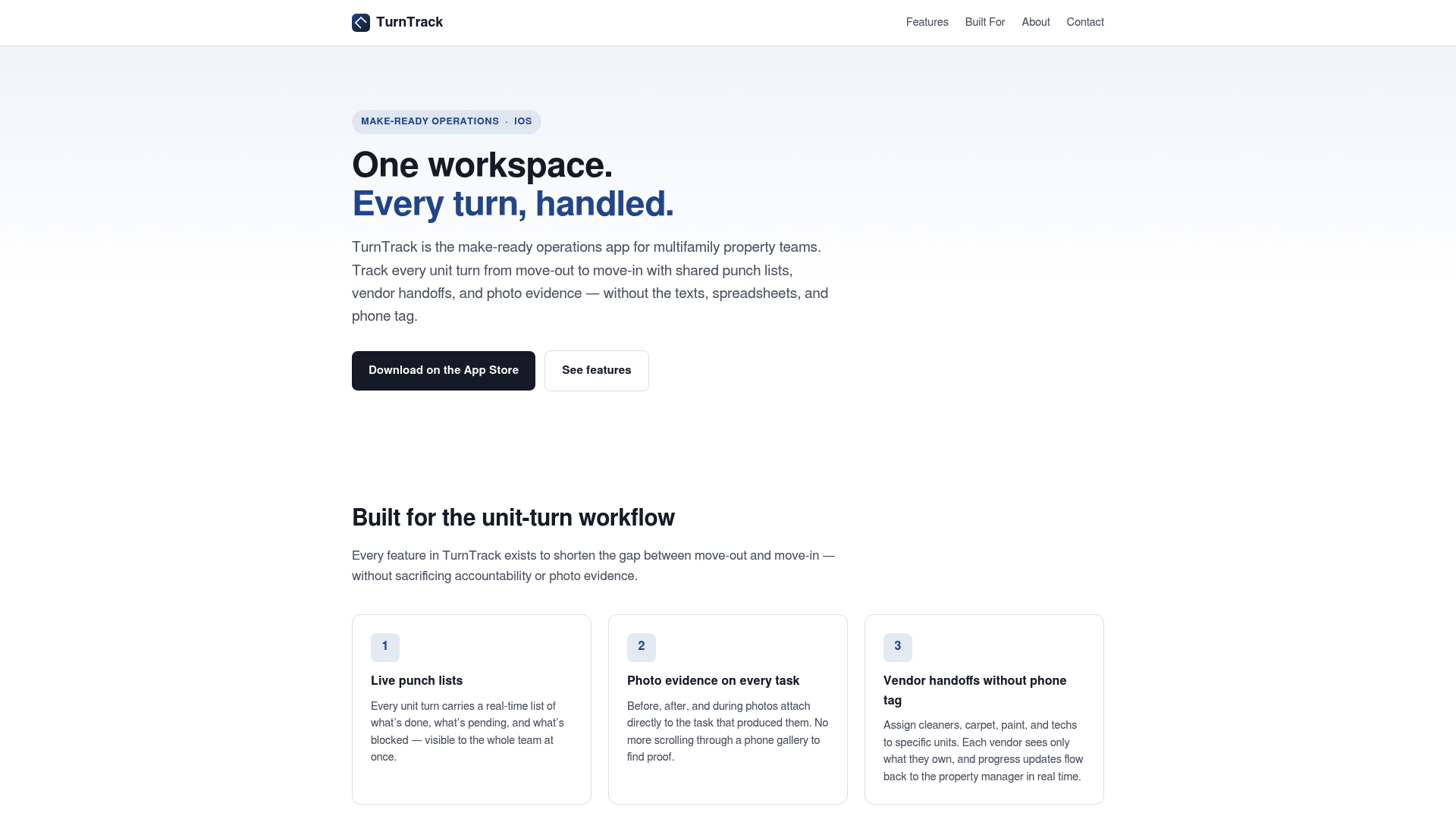
TurnTrack is a make-ready workflow tool built specifically for property managers and service managers running unit turns. Every turn gets a shared record with a status (Ready, On Track, At Risk, Overdue) and a timeline from Move-Out through Tech Start, Cleaners, Carpet, Inspection, and Make-Ready. Vendor contacts live inside the turn. The Property Standards Library stores the exact Sherwin-Williams paint shade, HVAC filter size, and preferred vendor for each property, shareable to any tech without requiring a TurnTrack account. Optional photo attachments support inspection documentation where the property requires it. TurnTrack is available on iOS at $14.99/mo with a free trial.
FAQ
What does "make ready" mean in property management?
Make ready refers to the process of preparing a rental unit for a new tenant after the previous occupant moves out. It covers repairs, cleaning, painting, inspection, and documentation to bring the unit to rent-ready condition.
What are the most common make ready concerns for property teams?
The most common concerns are trade sequencing delays, incomplete move-out scope, material shortages, skipped final inspections, and missing photo documentation for deposit deductions. Each one extends vacancy time or creates legal exposure.
What does California AB 2801 require for make-ready documentation?
AB 2801 requires landlords to provide timestamped photo evidence before and after any cleaning or damage work used to justify a security deposit deduction. Generic invoices without photos no longer satisfy the legal standard.
How long should a standard make-ready take?
Standard make-ready processes target a 24–72 hour window post-move-out, depending on unit size and condition. Extended timelines almost always trace back to poor sequencing or missing materials, not the work itself.
How does a make ready checklist reduce vacancy time?
A standardized checklist walked at move-out defines the full scope before any trade is scheduled. That prevents mid-turn discoveries, reduces rework, and keeps every trade on a predictable sequence from the first day of the turn.