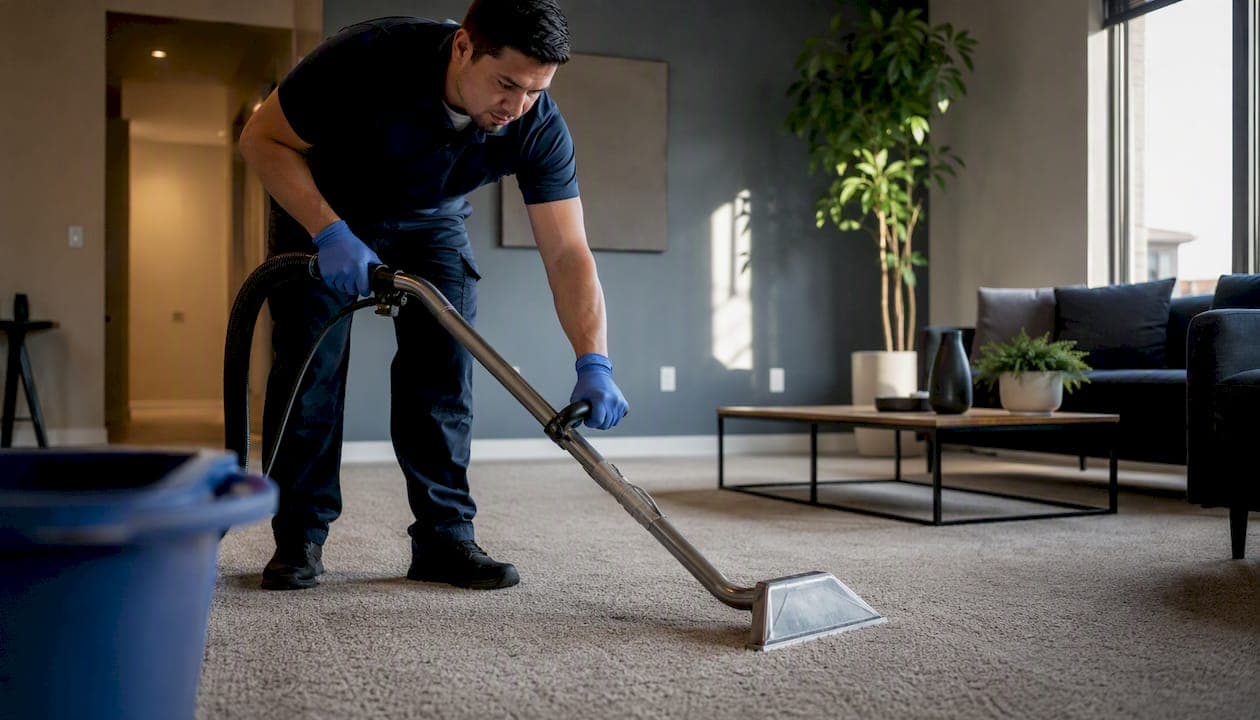
Clean the carpet if the fibers, pad, and subfloor are intact and a professional test clean clears the odor. Replace it if you find mold, backing failure, persistent smells after that test clean, or water damage that reached the subfloor. A professional clean runs a fraction of replacement cost, so the on-site checklist below is worth five minutes before you commit either way.
TL;DR:
- Professional cleaning effectively removes deep soil, dust mites, and bacteria, with truck-mounted systems providing superior suction and faster drying than rental machines.
- Visible mold, persistent odors after cleaning, and damage to backing or padding are clear signs that carpet replacement is necessary.
- Costs for professional cleaning generally range from $50 per room to $150 for a full house, while replacement can cost $3 to $11 per square foot, with full-room replacement around $1,800.
- Targeted repairs like patching or pad replacement can extend a carpet’s lifespan and resolve odors without full replacement.
- Carpet fiber type influences cleaning and replacement decisions, with nylon and wool more durable and resilient to cleaning, while olefin or polyester may require replacement sooner when worn.
Table of Contents
- Carpet Cleaning vs. Replacement: What Professional Cleaning Actually Fixes
- When Should You Replace Carpet Instead of Cleaning It?
- A Step-by-Step Checklist for Deciding on the Spot
- What Does Carpet Cleaning vs. Replacement Actually Cost?
- Patching, Pad Swaps, and Other Middle-Ground Fixes
- How Carpet Condition Affects Allergens and Indoor Air
- Is Cleaning or Replacing Carpet Better for the Environment?
- How Long Does Each Option Actually Take?
- Does Carpet Material Change the Clean-or-Replace Answer?
- Balancing Turnaround Time, Tenant Experience, and Owner Budgets
- Document the Decision With TurnTrack
- Sources
Carpet Cleaning vs. Replacement: What Professional Cleaning Actually Fixes
Professional cleaning pulls out deep soil, dust mite waste, and bacteria that a vacuum or a rented machine never touches. Truck-mounted extraction systems generate more suction and heat than consumer rental units, which means better extraction and faster drying. Rental machines tend to leave carpet wetter and with more shampoo residue behind, which invites new soil to stick faster than before.
Two methods dominate the professional market:
- Hot water extraction (steam cleaning): deepest clean, best for heavy soil, but needs 6 to 12 hours to dry
- Low-moisture encapsulation: faster drying, good for maintenance cleans between deep cleans, less effective on old stains
Manufacturers often tie warranty coverage to periodic professional cleaning, typically every 12 to 24 months depending on traffic. Skip that schedule and you can void the warranty even if the carpet is otherwise fine. Homes with pets or kids under six usually need the shorter end of that window; a low-traffic guest room can stretch it.
When Should You Replace Carpet Instead of Cleaning It?
Some damage cleaning cannot undo, no matter how good the technician is. The CDC's guidance is blunt on one point: replace carpet that has gone moldy or stayed damp for an extended period rather than trying to clean it back to safe.
Watch for these non-negotiable signs:
- Visible mold, mildew smell, or carpet that stayed wet more than 48 hours after a leak
- Backing that's cracking, delaminating, or visibly showing through worn fibers
- Padding that's compressed flat, crumbling, or soaked through to the subfloor
- Odor that survives a professional cleaning attempt
- Staining that doesn't lift after treatment, especially from pet urine that's soaked through to the pad
- Carpet past 10 to 15 years old with fibers that no longer spring back when you press them
Pro Tip: If a room smells fine dry but sour when damp, press a white towel into the pile for 30 seconds. Odor or discoloration transferring to the towel usually means the pad is contaminated, even if the surface fibers look clean.
A Step-by-Step Checklist for Deciding on the Spot
Run this sequence room by room rather than guessing from the doorway. It takes fifteen minutes and gives you something you can point to later if an owner or resident disputes the call.
- Look and press. Check for visible backing, matting that doesn't bounce back when you fluff it with your hand, and any discoloration in high-traffic lanes.
- Smell it wet and dry. Odors that only show up when the carpet is damp usually mean pad or subfloor contamination, not a surface problem.
- Run a test clean. Have a professional treat one contaminated area, or the whole room if it's small, then wait 24 hours and recheck for smell and staining.
- Check the pad and subfloor wherever you can lift a corner or access a closet edge. Water stains on the underside of trim or discoloration on the subfloor itself both point toward replacement.
- Pull maintenance records. Confirm when it was last professionally cleaned and whether the manufacturer's warranty terms are still in play.
- Match the result to an action: clean and move on, clean and monitor for 30 days, patch the affected section, or replace the whole room.
Signs that a carpet won't respond to cleaning usually cluster together. One issue alone, like a single old stain, rarely justifies full replacement on its own.
What Does Carpet Cleaning vs. Replacement Actually Cost?
Professional cleaning is the cheaper move by a wide margin, but the gap narrows fast if you're cleaning a problem carpet every few months instead of fixing it once.
| Service | Typical Cost | Notes |
|---|---|---|
| Professional cleaning (per room) | $50 | Higher with pet treatment or heavy staining |
| Whole-house cleaning (3 to 4 rooms) | $150 | Truck-mounted extraction included |
| Replacement, installed (per sq ft) | $3–$11 | Mid-grade typically runs $4.50–$8 |
| Living room full replacement | ~$1,800 | Includes carpet, pad, removal, and labor |
A few things push replacement costs higher than the base range:
- Stairs and tight cuts add labor time
- Subfloor repair after water damage can add hundreds per room
- Furniture removal and disposal fees for old carpet, if not included in the quote
If the carpet itself looks fine but the room smells off, ask about swapping just the pad before you price a full replacement. It's often the cheaper fix and solves the actual problem.
Patching, Pad Swaps, and Other Middle-Ground Fixes
Full replacement isn't the only alternative to cleaning. A few targeted repairs can extend a carpet's useful life without the full room cost.
- Spot patching works well for a single burn, tear, or stain if you have matching scrap carpet from the original install; expect $75 to $150 for a small patch done right.
- Pad replacement alone often resolves lingering odor and resilience loss when the visible fibers are still sound.
- Hybrid fixes buy time, not permanence. A patched carpet with worn pile elsewhere in the room will still need full replacement eventually.
- When hiring for patch work, require seam placement away from traffic paths and a pile-direction match. A mismatched patch is more visible than the damage it covers.
How Carpet Condition Affects Allergens and Indoor Air
Carpet acts like a filter. It traps dust, pet dander, pollen, and dust mite allergens instead of letting them stay airborne, which helps most of the time and works against you when the carpet is overdue for cleaning. A carpet that hasn't been professionally cleaned in years holds onto allergens that regular vacuuming can't reach down in the pile and backing.
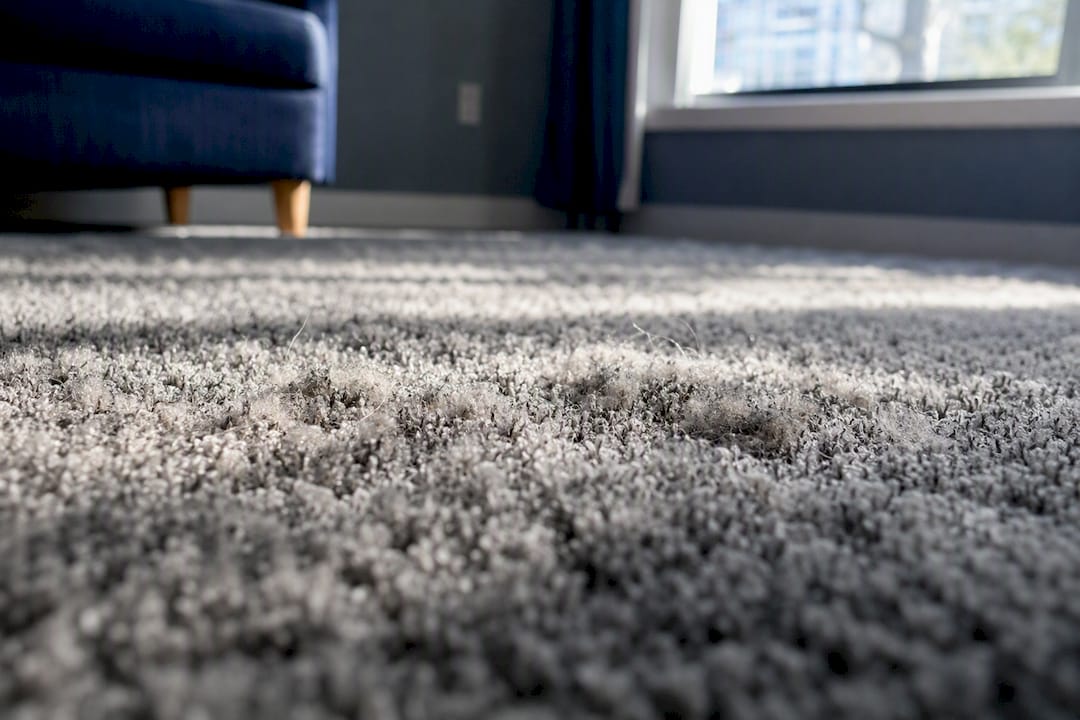
Mold is the sharper health concern. Carpet that's stayed wet, whether from a slow leak, a flooded basement, or a spilled aquarium nobody caught in time, can grow mold within 24 to 48 hours in the pad even if the surface looks dry. That's why replacing moldy or chronically damp carpet, rather than trying to clean around it, is the standard health guidance rather than a cautious overreaction.
The best outcomes come from treating cleaning as ongoing maintenance rather than a one-time fix: regular HEPA vacuuming, humidity control in damp climates or basements, quick spot treatment of spills, and periodic professional cleaning on the manufacturer's recommended schedule. A single deep clean helps, but it doesn't undo months of dust and allergen buildup if it's the only maintenance the carpet ever gets.
For households with asthma, allergies, or young kids crawling on the floor, lean toward cleaning more often and replacing sooner when odor or staining shows up. The cost difference between a $75 cleaning and a $1,800 replacement matters less than it sounds when the alternative is months of daily allergen exposure.
Is Cleaning or Replacing Carpet Better for the Environment?
Replacement generates real waste. Old carpet and pad typically end up in a landfill, since most municipal recycling programs don't accept carpet and specialty recyclers aren't available everywhere. A single living room replacement can send 30 to 50 pounds of carpet and pad to the curb once you count the backing material.
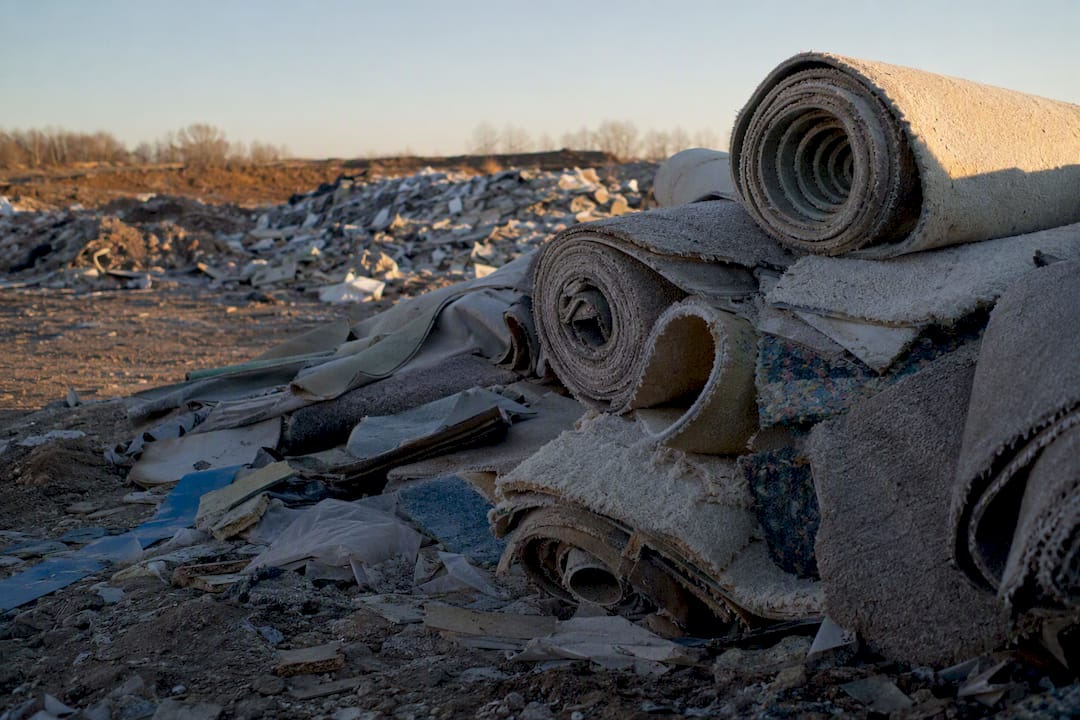
Cleaning avoids that waste stream entirely, but it isn't chemical-free. Traditional shampooing and spot treatments use solvents and detergents that some households want to limit, especially with pets or small kids on the floor daily. Low-moisture encapsulation methods generally use less water and fewer chemicals per square foot than full hot water extraction, which makes them a reasonable middle ground for routine maintenance cleans rather than deep annual treatments.
If sustainability is a real factor in the decision, ask your cleaning provider what products they use and whether they offer low-VOC or green-certified options. On the replacement side, ask whether the installer will send old carpet to a take-back or recycling program instead of a standard landfill haul. Neither choice is emissions-free, but a carpet that gets cleaned on schedule and lasts its full 10 to 15 year lifespan produces far less waste over time than one that gets replaced every five years because maintenance was skipped.
How Long Does Each Option Actually Take?
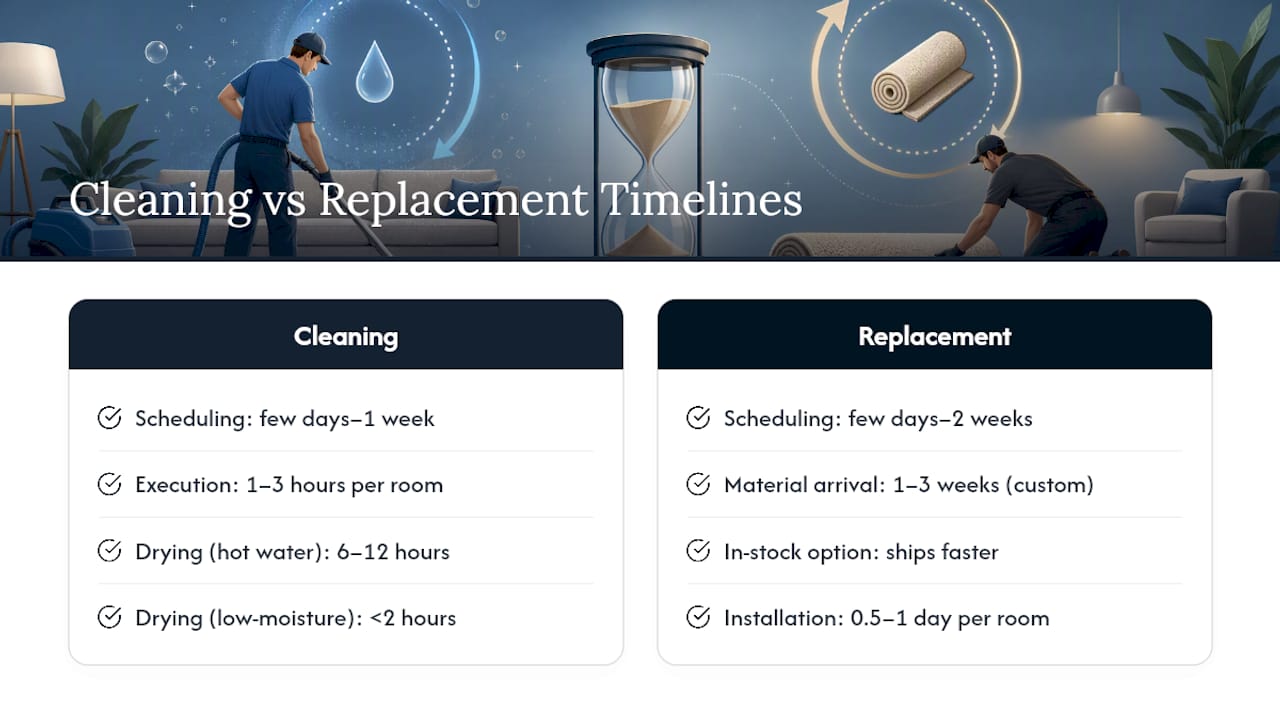
Professional cleaning is the fast option almost every time. Scheduling typically takes a few days to a week depending on the provider's calendar, and the clean itself runs one to three hours per typical room. Drying time is the real variable: hot water extraction needs 6 to 12 hours before the room is fully walkable in socks, while low-moisture methods can be dry in under two hours.
Replacement takes longer at every stage. Getting a quote and picking material usually takes a few days to a couple of weeks if you're comparing options. Once you order, custom or less common carpet can take one to three weeks to arrive, though in-stock rolls at big retailers ship faster. Installation itself typically runs a half day to a full day per average-sized room, longer if the crew has to move furniture, tear out old carpet, or repair subfloor issues they find once the old material comes up.
For a property manager working a unit turn, that timeline gap matters more than the sticker price. A cleaning can often happen within the same week as a move-out inspection. A full carpet replacement can push a turn date back by two to three weeks once ordering and installation scheduling stack up, which is exactly the kind of delay that turns a fast-moving vacancy into a lost month of rent.
Does Carpet Material Change the Clean-or-Replace Answer?
Fiber type changes both how well cleaning works and how soon replacement becomes necessary. Wool carpet holds up to repeated professional cleaning better than most synthetics and resists soiling naturally, but it's more sensitive to over-wetting and harsh chemicals, so it needs a cleaner experienced with natural fibers rather than a generalist.
Nylon, the most common synthetic in rental housing, is durable and responds well to hot water extraction, which makes it a good candidate for cleaning even after visible wear. Polyester holds color well but crushes under heavy traffic faster than nylon, and once the pile flattens permanently, cleaning won't restore the texture, only the surface cleanliness. Olefin (polypropylene) resists staining from water-based spills but degrades under heat and heavy foot traffic, so a badly worn olefin carpet is often a replace-not-clean situation even if it looks presentable.
Berber and loop-pile styles trap dirt differently than cut pile and can snag during aggressive cleaning if the technician isn't careful with equipment settings. For technical specs on how material affects installation and long-term cost, it's worth understanding fiber type before you commit either way, since the same stain that ruins polyester might come out of nylon without issue.
Balancing Turnaround Time, Tenant Experience, and Owner Budgets
Quick professional cleaning keeps a unit rentable when the fibers are sound and the smell test clears. Owners lean toward replacement when disputes over deposit deductions loom, and photos plus dated logs settle those arguments fast. Turn techs should run the checklist above before quoting either option.
— TurnTrack Team
Document the Decision With TurnTrack
TurnTrack gives property teams one place to record the clean-or-replace call instead of scattering it across texts and memory. Every unit gets a shared timeline from Move-Out through Cleaners, Carpet, Inspection, and Make-Ready, so everyone on the team sees where a turn stands without a status-check text.

Attach optional photos to inspection items when you're documenting odor, staining, or water damage, whether that's the trial professional clean everyone agreed to try first or the subfloor damage that settled the replacement call. The Property Standards Library keeps carpet grade, pad specs, and preferred vendor contacts in one place, so a tech asking what carpet goes in a renovated unit gets a straight answer instead of a guess. Vendor coordination lives right inside the turn record, so the carpet crew's contact info is where you're already working, not buried in a separate contact list.
TurnTrack runs as a workspace subscription at $14.99 a month with a free trial, available now on iOS through the App Store, with Android arriving soon. Start your free trial and see how the next carpet decision gets documented before anyone has to argue about it.
Sources
- Benefits of professional carpet cleaning — TaskRabbit
- 5 ways carpet cleaning improves health & hygiene — ArtOfCleans
- Carpet cost (2026) — RemodelCalculators